Current and Former Engle Lab Students Recognized by National Science Foundation

Hearty congratulations to three outstanding young chemists from the Engle lab, who were acknowledged by the National Science Foundation Graduate Research Fellowship Program:

• Pranali Bedekar, UCSD undergrad intern (2019–present), starting in the Ph.D. program at Scripps Research this fall
– awarded Graduate Research Fellowship

• Hanh Nguyen, UCSD undergrad intern (2018–2019), currently enrolled in the Ph.D. program at UC Irvine with Prof. Chris Vanderwal
– awarded Graduate Research Fellowship

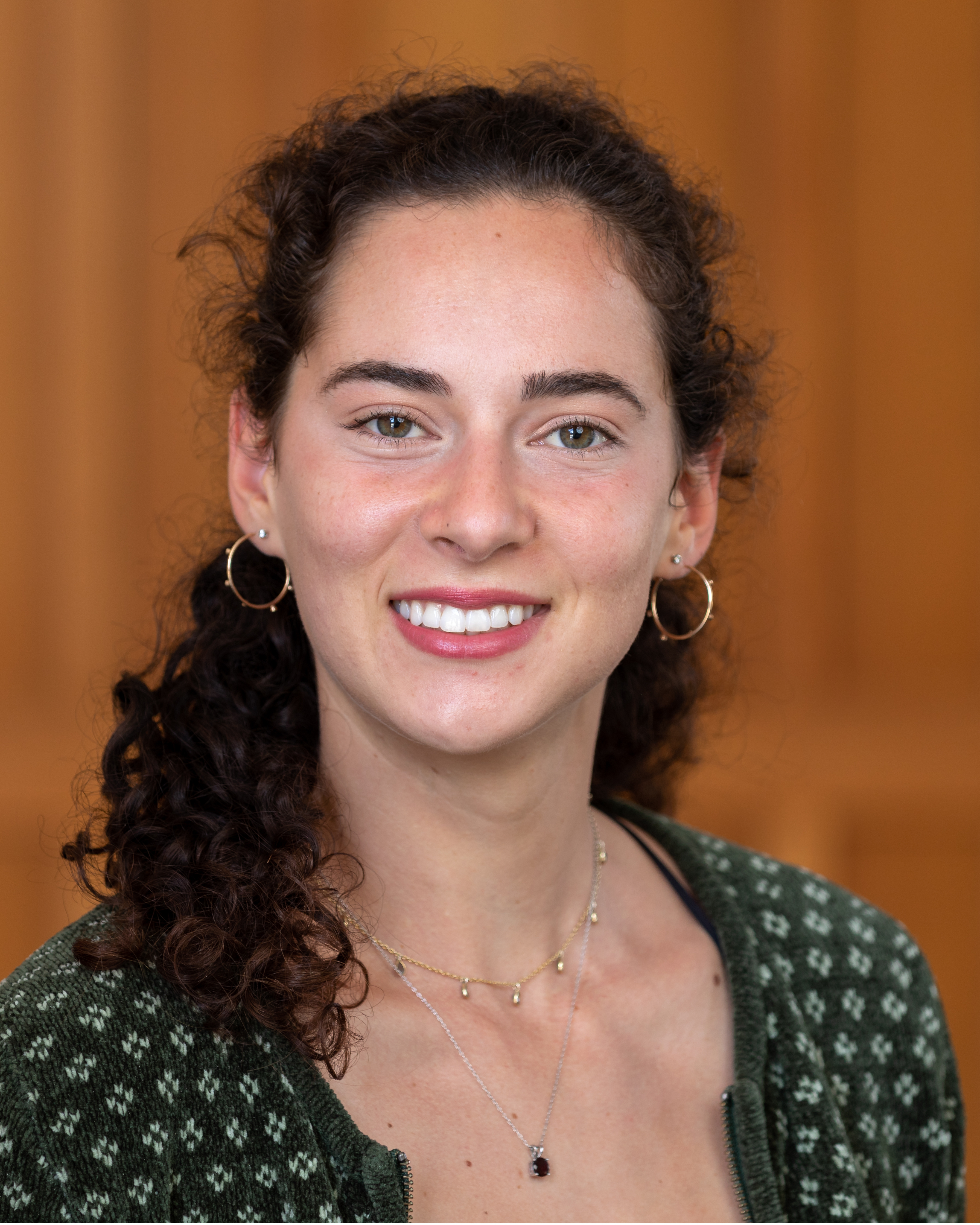
• Camille Rubel, current TSRI grad student and Engle lab member (2020–present)
– acknowledged with Honorable Mention

Wen-Ji and Jing-Cheng complete their undergrad internships

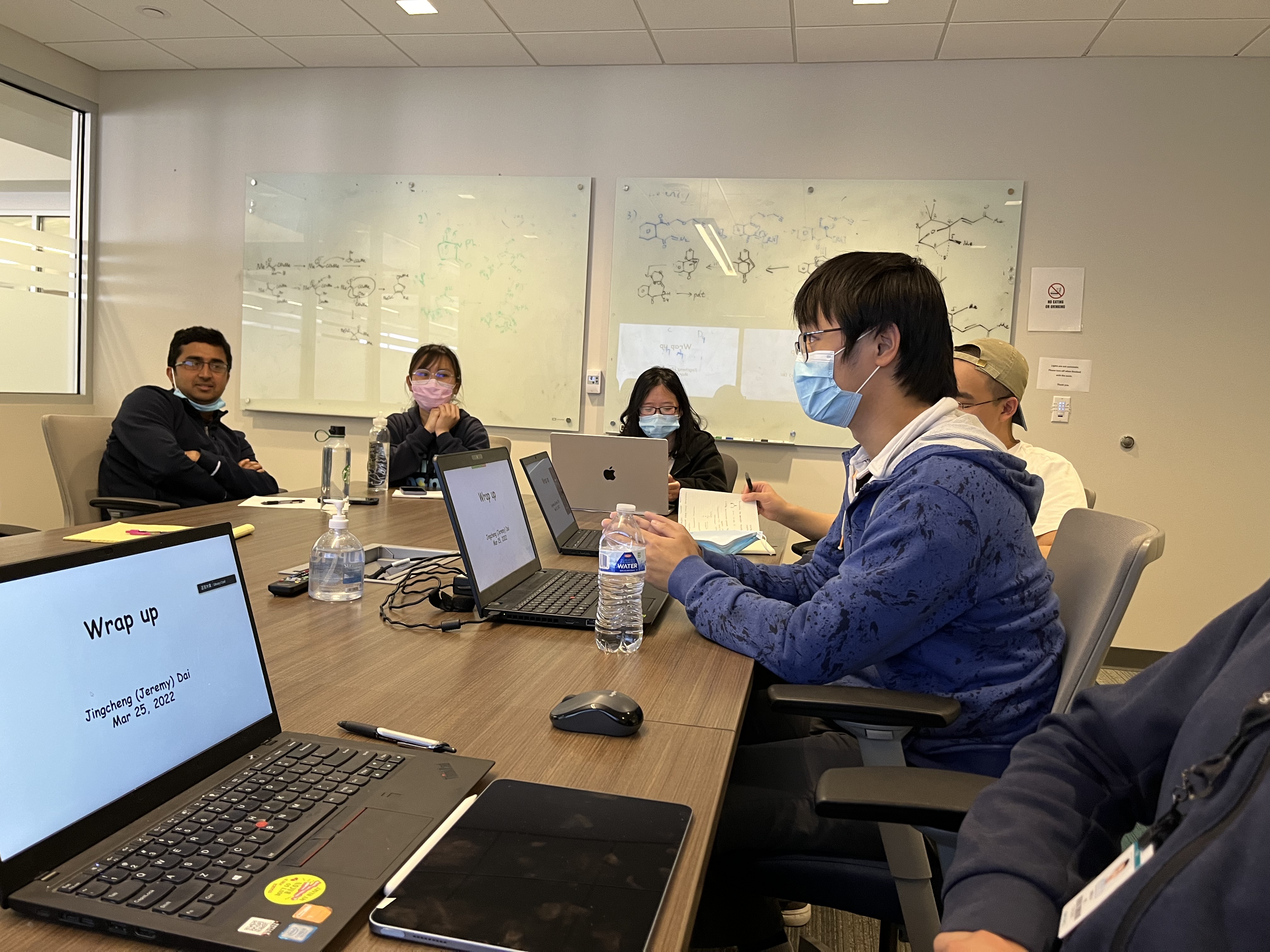
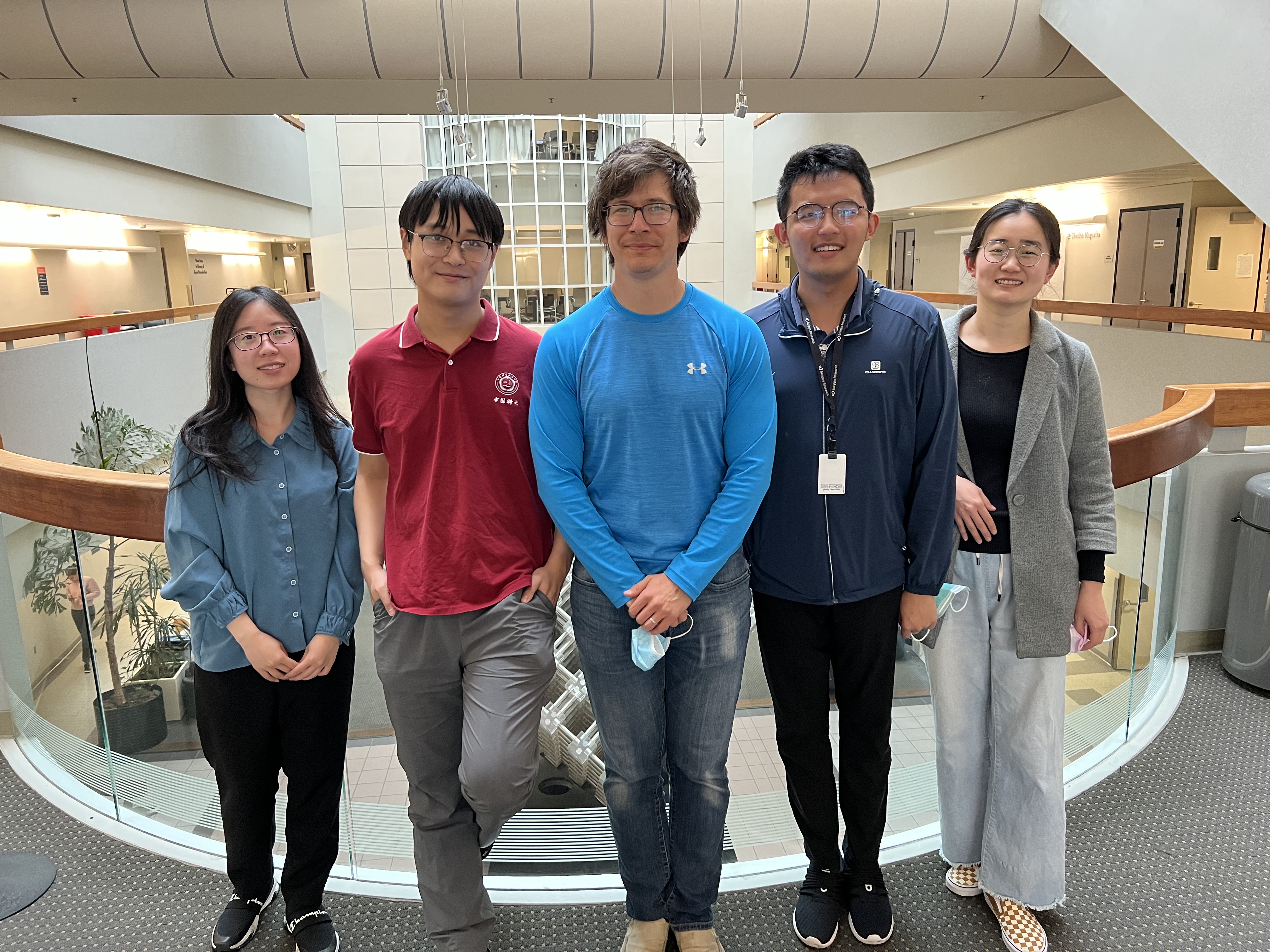
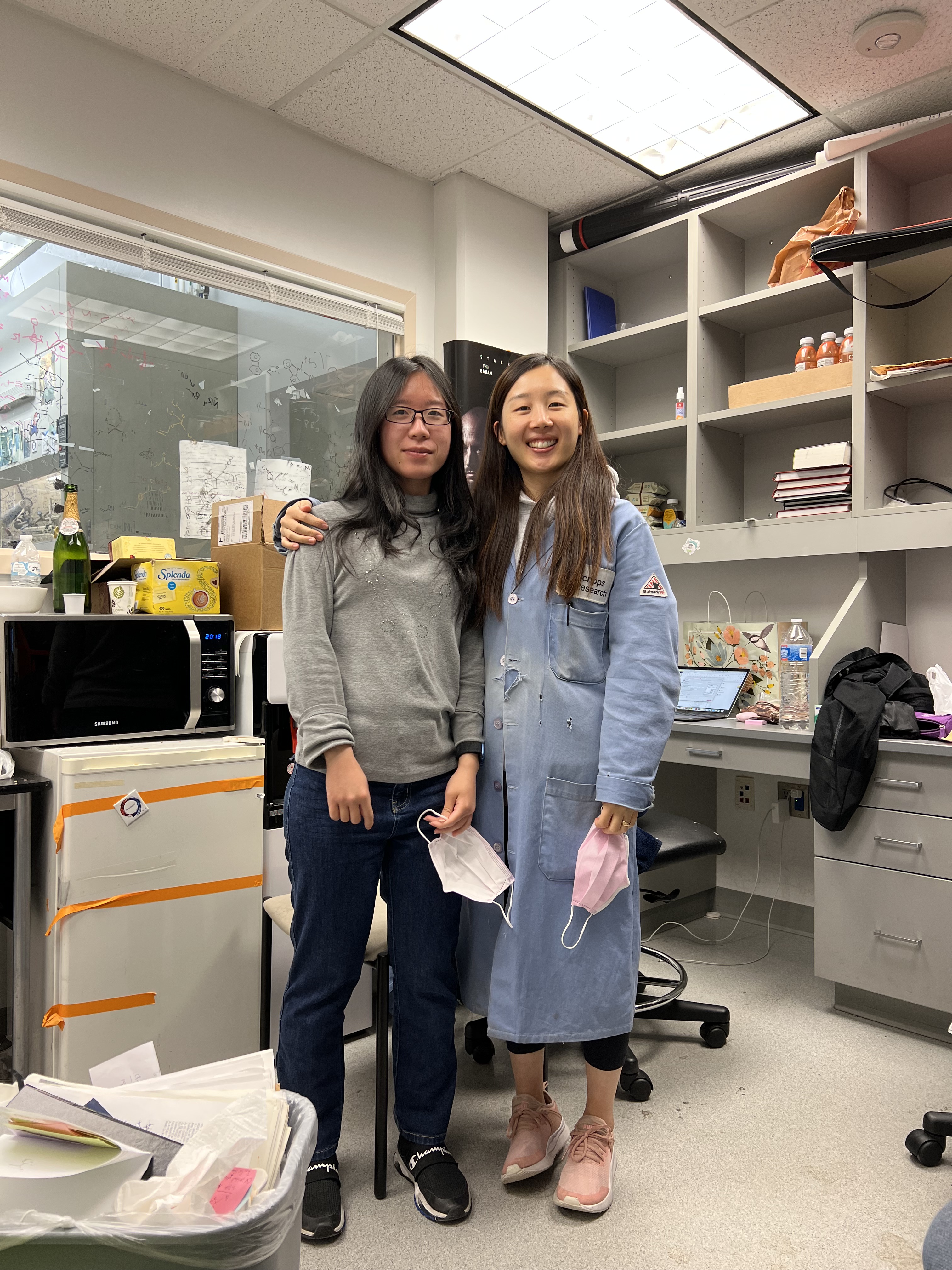
Our superstar visiting undergrads Wen-Ji He and Jing-Cheng Dai have completed their internships , and will now return to their home institutions, Nankai University and USTC, respectively, to complete their undergrad degree requirements. We are grateful for their hard work and dedicating over the past several months, and we can’t wait to see what these two will accomplish during the PhDs. Wen-Ji will return to Scripps Research, and Jing-Cheng will be heading to UW Madison. Thanks to Zi-Qi and Hui-Qi for great mentorship throughout the internship period.

Drs. Yeongyu Hwang and Johny Nguyen join the group as postdocs

The Engle lab is pleased to welcome two new postdocs, Drs. Yeongyu Hwang and Johny Nguyen, who start in the lab this week.

Yeongyu completed his Ph.D. at KAIST with Prof. Sukbok Chang, where his research focused on iridium-mediated nitrene transfer reactions enabled by innovative catalyst design.

Johny completed his Ph.D. at Vanderbilt with Prof. Steve Townsend, where his research focused on the synthesis and biological investigation of zwitterionic polysaccharides.

We look forward to working with these two and seeing what exciting science they pursue in the Engle lab over the coming years!

Nickel-Catalyzed Alkene 1,2-Alkylsulfenylation – Pre-Print Now Online

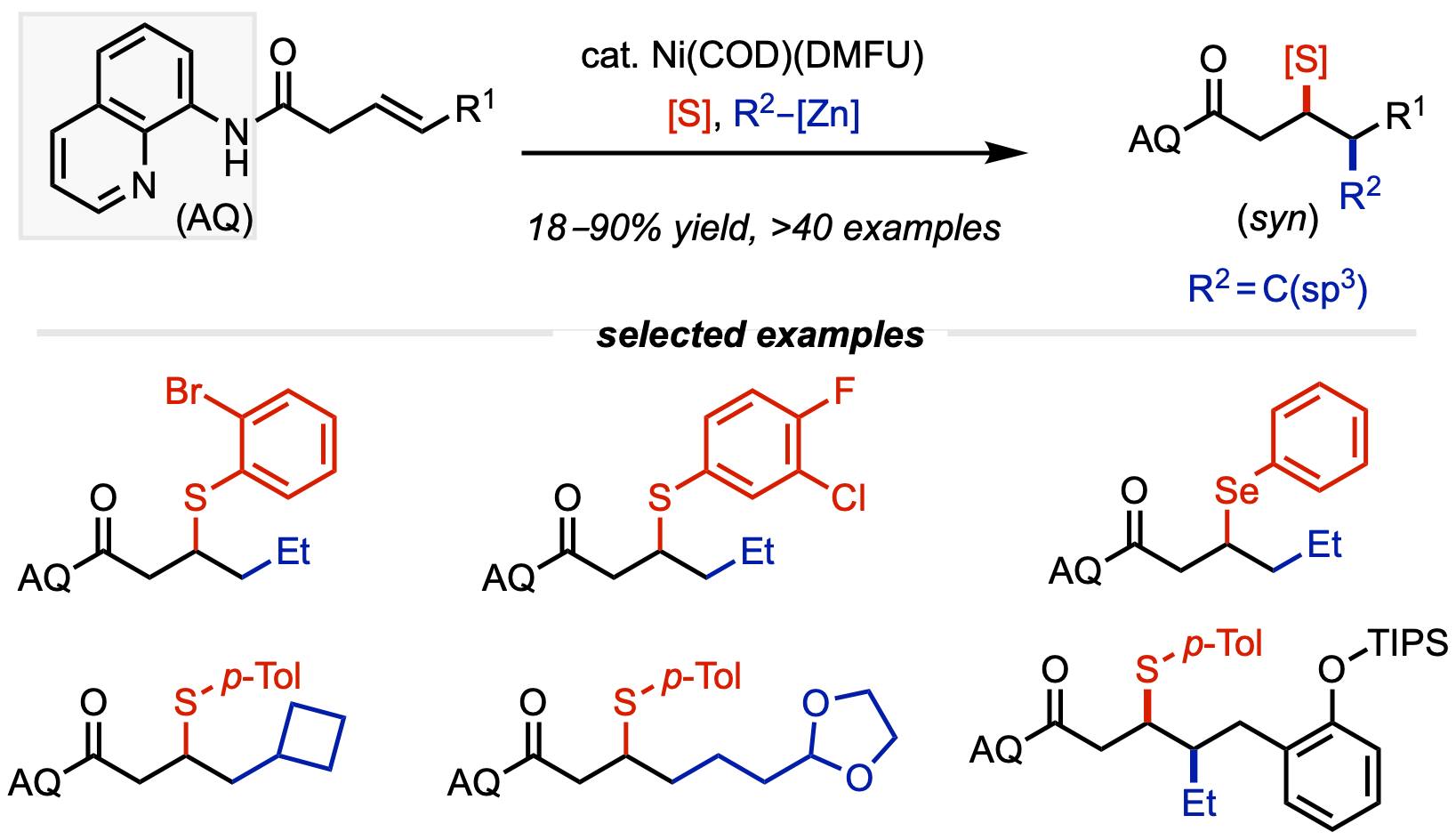
Continuing with our recent theme of developing new methods for C(sp3)–S bond formation via nickel-catalyzed syn-carbosulfenyation of alkenes, in today’s ChemRxiv pre-print we describe a new three-component method for combining alkylzinc nucleophiles, sulfur electrophiles, and unactivated alkenes. The method complements previous methodology from our group by expanding the scope of C(sp2) nucleophiles to C(sp3) nucleophiles and is enabled by use a bidentate directing auxiliary group. The method is compatible with a diverse collection of coupling partners including various E– and Z-configured internal alkenes. Congrats to the project team, grad students Zi-Qi and Hui-Qi and visiting undergrad Wen-Ji. Great work team!

For a link to the pre-print in ChemRxiv, click here: https://chemrxiv.org/engage/chemrxiv/article-details/6233b0c08ab3732b56687bad

Free-Amine-Directed 1,2-Carboamination of Alkenes – Now In Press

The final version of our paper on free-amine-directed 1,2-carboamination of alkenes under nickel catalysis is available online today in ACS Catalysis. In this manuscript, we describe how careful tuning of the reactivity of the nitrogen electrophile through modification of the leaving group allows for the first example of three-component 1,2-difunctionalization of alkene with a free amine directing group. The reaction proceeds with a broad scope of organoboron coupling partners, cyclic and acyclic amine electrophiles, and primary and secondary alkenyl amine substrates. Congrats to Taeho, José, and Zi-Qi, as well as our collaborators Klement and Peter from discovery chemistry at Bristol Myers Squibb.

For a link to the paper, click here: https://pubs.acs.org/doi/full/10.1021/acscatal.2c00373

As a reminder, a pre-print of the paper first appeared in ChemRxiv back in December 2021: https://chemrxiv.org/engage/chemrxiv/article-details/61b14f9a7ada95b46a6e62ee

C(alkenyl)–H Activation Enabled by a Transient Directing Group – Pre-Print Now Online

We continue our investigations into dual catalytic alkene functionalization promoted by a metal and a transient directing group (TDG). We previously described methods for Heck-type hydroarylation and 1,2-arylfluorination. In this ChemRxiv pre-print we show that it is instead possible to achieve C(alkenyl)–H activation from a common Pd(II)–alkene olefin intermediate, as promoted by a tailored carboxylate additive. This mode of reactivity can be leveraged in the oxidative cross-coupling of two alkenes to yield 1,3-diene products, including axially chiral 3-aryl-1,3-dienes. Congrats to the entire project team: Mingyu, Juntao, Hui-Qi, and Raúl from our lab; and Tuğçe from the Liu group the University of Pittsburgh.

Nana departs for BMS

Congrats to Dr. Nana Kim, who completes her postdoc this week. During her time in the Engle lab, Nana spearheaded new directions in nickel pre-catalyst development, including the identification of Ni(COD)(DMFU) as a potent precatalyst for alkene diarylation and development of a versatile bench-stable Ni(0) precatalyst for a variety of important catalytic reactions. Nana will soon start her career as a process chemist at Bristol Myers Squibb in New Brunswick, NJ. We wish you the best of luck in your new adventure, Nana!

Tanner successfully defends his Ph.D. Thesis

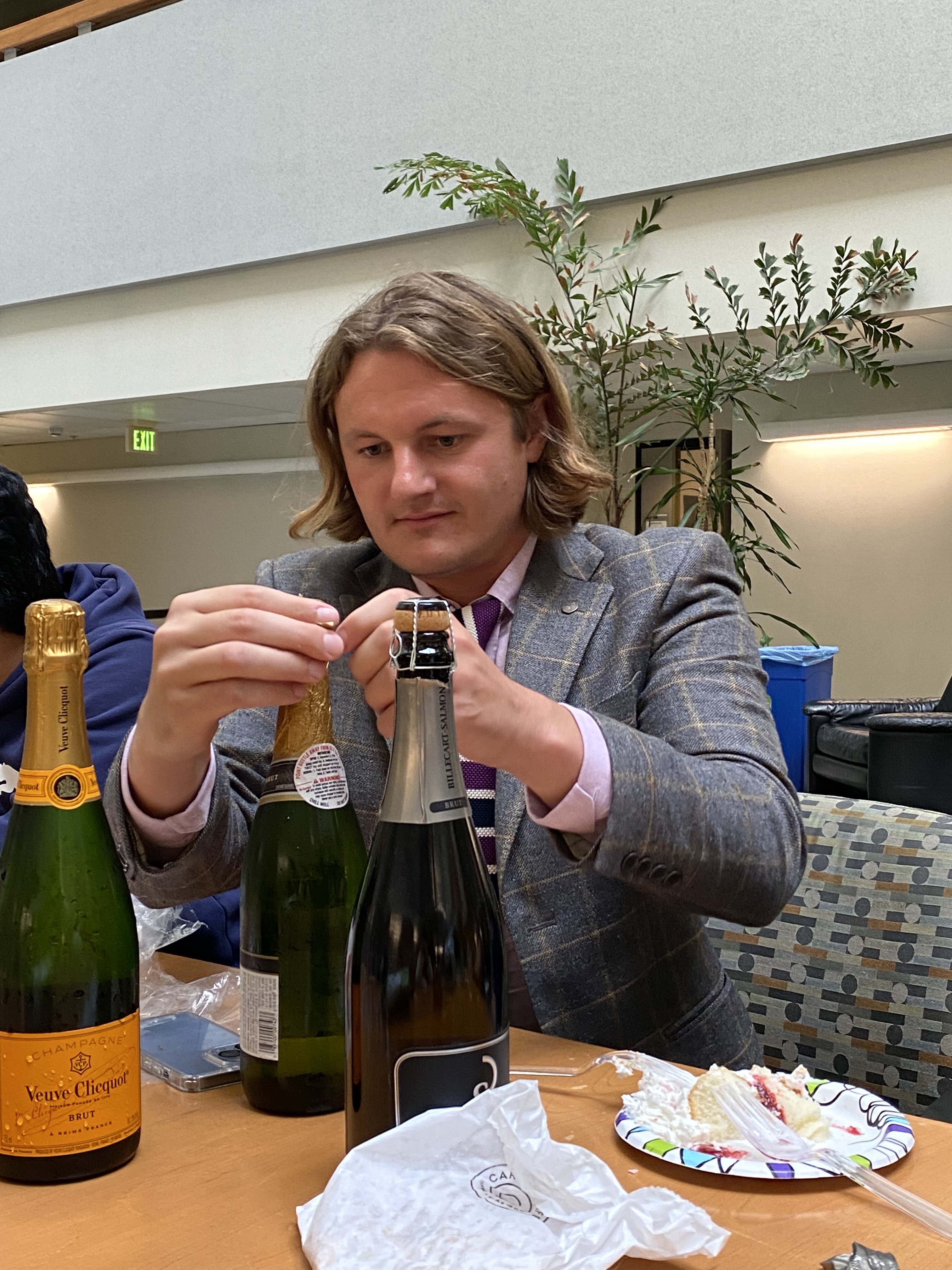
Congrats to the Engle lab’s newest doctor, Tanner C. Jankins, Ph.D.! In Tanner’s Ph.D. research, he spearheaded a new research directing focused on W(0)/W(II) redox catalysis, where non-classical seven coordinate geometries at W(II) can be exploited to enable facile alkene isomerization–functionalization processes. Outside of the lab, Tanner served as Engle group chef, the Scripps resident extreme sports instructor, and organometallics grad course TA. Congratulation on all of your success Tanner! Tanner will soon start his postdoc in the lab of Prof. Bill Morandi at ETH Zürich.

new bench-stable Ni(0) pre-catalyst toolkit – pre-print now online.

In collaboration with chemistry from Cornell University, Bristol Myers Squibb, and UC San Diego, today we report the culmination of a multi-year effort to identify new bench-stable Ni(0) precatalysts with coordination properties that complement Ni(COD)(DQ) (COD = 1,5-cyclcooctadiene, DQ = duroquinone) in terms of reactivity and stability. After surveying upwards of 100 ligands, we identified 10 18-electron complexes of the type Ni(COD)(L), where L = quinone, cyclopentadienone, thiphene-S-oxide, of fulvene) that are remarkable air-stable in solid and solution state. We characterized this family of complexes using NMR, X-ray crystallography, IR, NBO analysis, CV, and TGA, and showed how their kinetic behavior varies when used as pre-catalysts in a variety of Ni-catalyzed reactions from the literature. Congrats to the whole team, especially project leads Van and Nana!

For a link to the ChemRxiv pre-print, click here: https://chemrxiv.org/engage/chemrxiv/article-details/62034cfce0f52929aeac5fd0

Regioselective (CAAC)Cu-Catalyzed Carboboration of Alkynes – Pre-Print Online

The latest results from our collaboration on (CAAC)Cu catalysis (CAAC = cyclic(alkyl)(amino)carbene) with the Grotjahn lab (SDSU) and Betrand lab (UCSD) are described in a pre-print appearing today in ChemRxiv. Building on our previous discovery that strong σ-donating CAAC ligands can effectively quench the Lewis acidity of boryl ligand on the Cu center and promote regioselective boryl transfer to the internal (α) position (Angew. Chem. Int. Ed. 2021, 60, 19871) in protoboration, in the current study we extend this concept to a number of C(sp3) electrophiles. This protocol allows for expedient and selective assembly of alkenylboron products that are versatile building blocks in synthesis. Hats off to the tri-institutional team: Yang, Nana, Sima, Mingyu, Aaron, Doug, Guy, Rudy, and Keary!

For a link to the ChemRxiv pre-print, click here: https://chemrxiv.org/engage/chemrxiv/article-details/61f8b9da360c842812b1d6c2