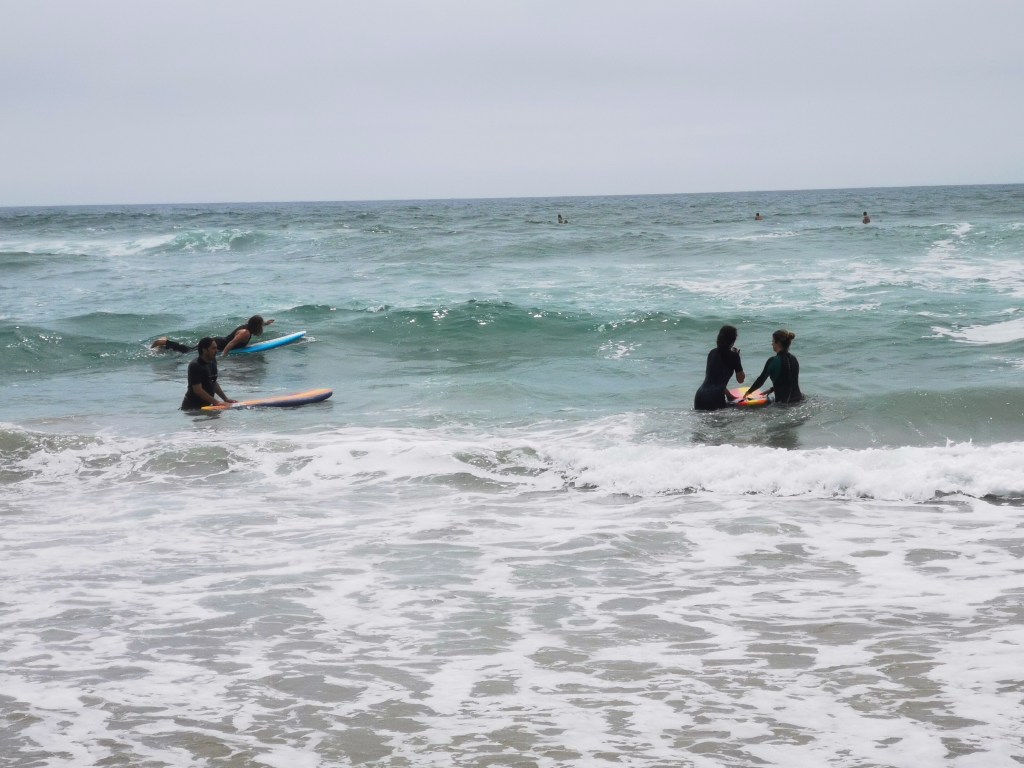
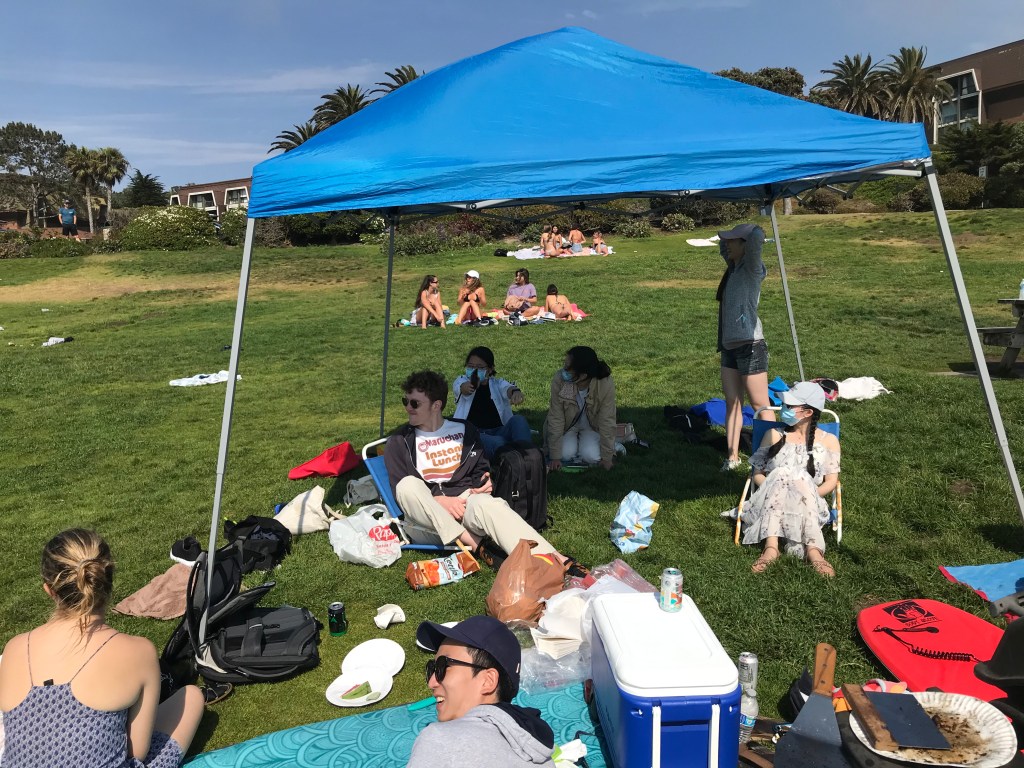
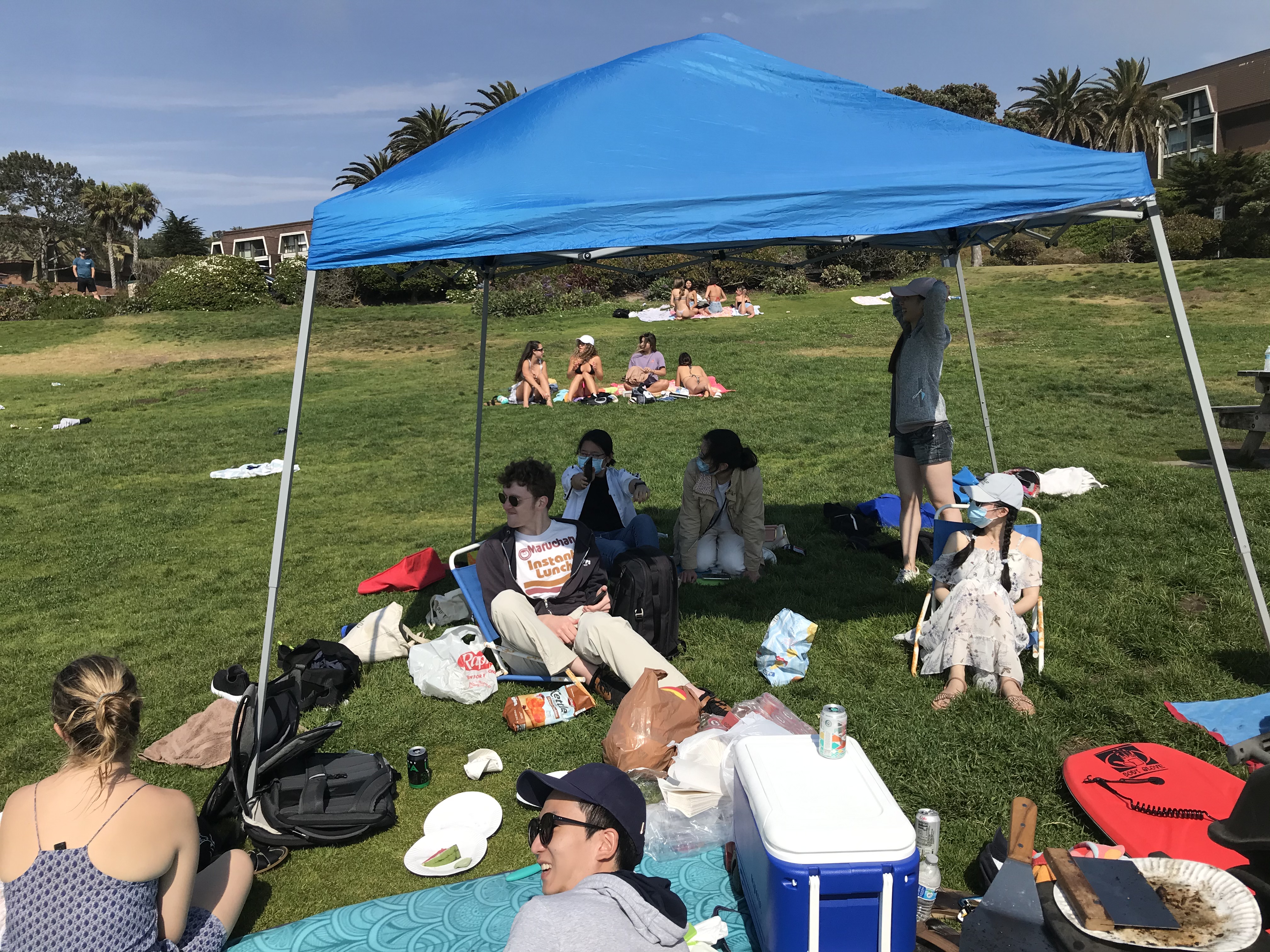
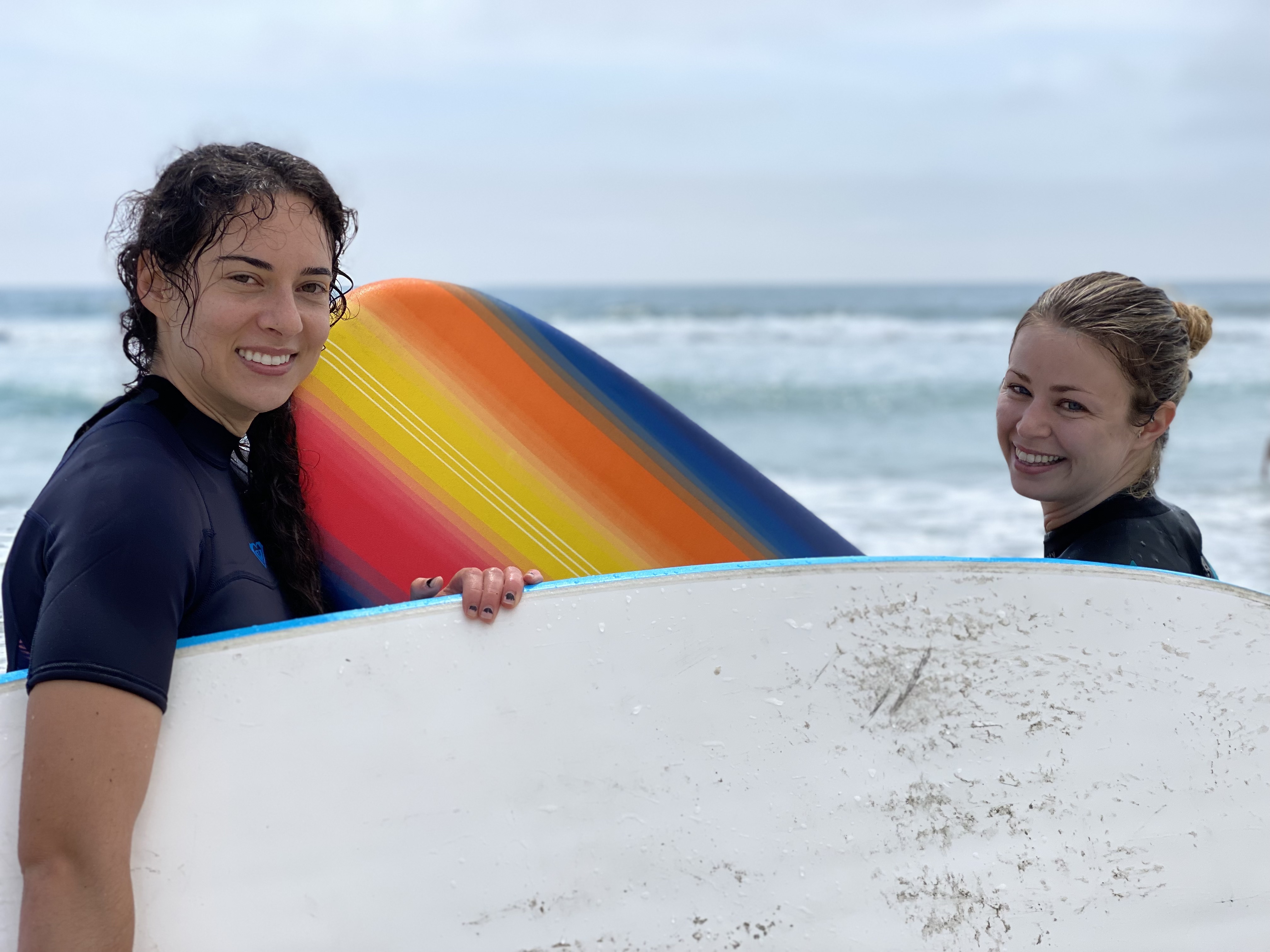
Time flies when you’re having fun, living through a pandemic, or both! The Engle lab celebrated six wonderful years at Scripps with an afternoon at the beach in Del Mar, where we enjoyed surfing, frisbee, and BBQ. The event doubled as a welcome party for our two newest members, José and Yilin. After more than a year of virtual social events, it was a special treat to gather together and celebrate this milestone.
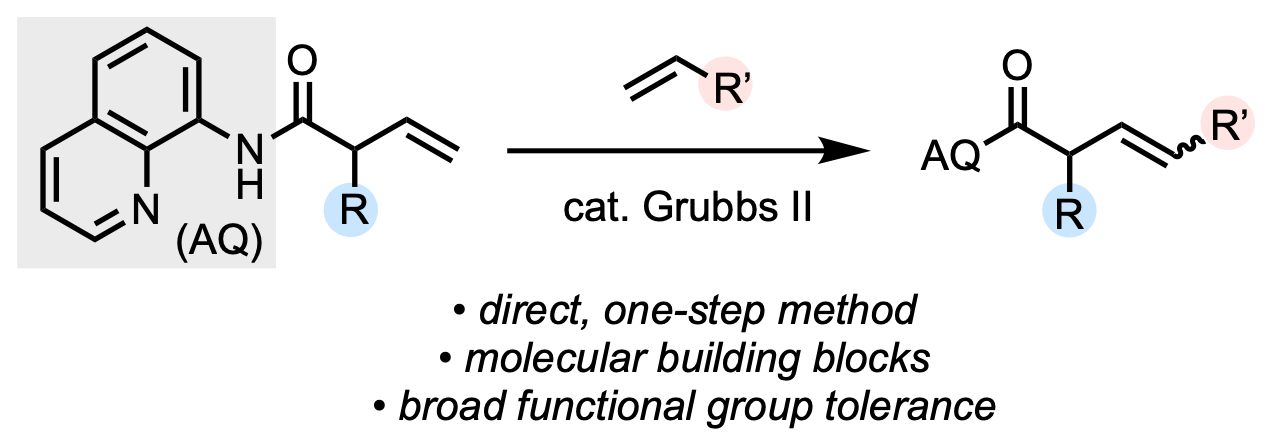
Over the years we’ve experienced first-hand the frustrations of resorting to circuitous synthetic routes to access substituted alkenyl AQ amide substrates, which serve as cornerstones of AQ-directed alkene functionalization chemistry. To address this Hui-Qi, Zi-Qi, and Van teamed up to develop a concise and modular method using cross-metathesis with the Grubbs 2nd generation catalyst. Remarkably the catalyst is impervious to the AQ group, allowing direct coupling of terminal alkenyl AQ amides with a variety of terminal alkenes. In one case, we shorten a four-step sequence to a single high-yielding step. This paper is part of a special issue in Tetrahedron celebrating Prof. Guangbin Dong’s2021 Tetrahedron Young Investigator Award. Well done team!
We have a summer visiting gradudate student José González from Gulías group at CIQUS-USC, Spain. He has been working on enantioselective Pd-catalyzed C-H activation at Gulías group. In the Engle lab, he is turning his attention to Ni-catalysis, collaborating with Taeho.
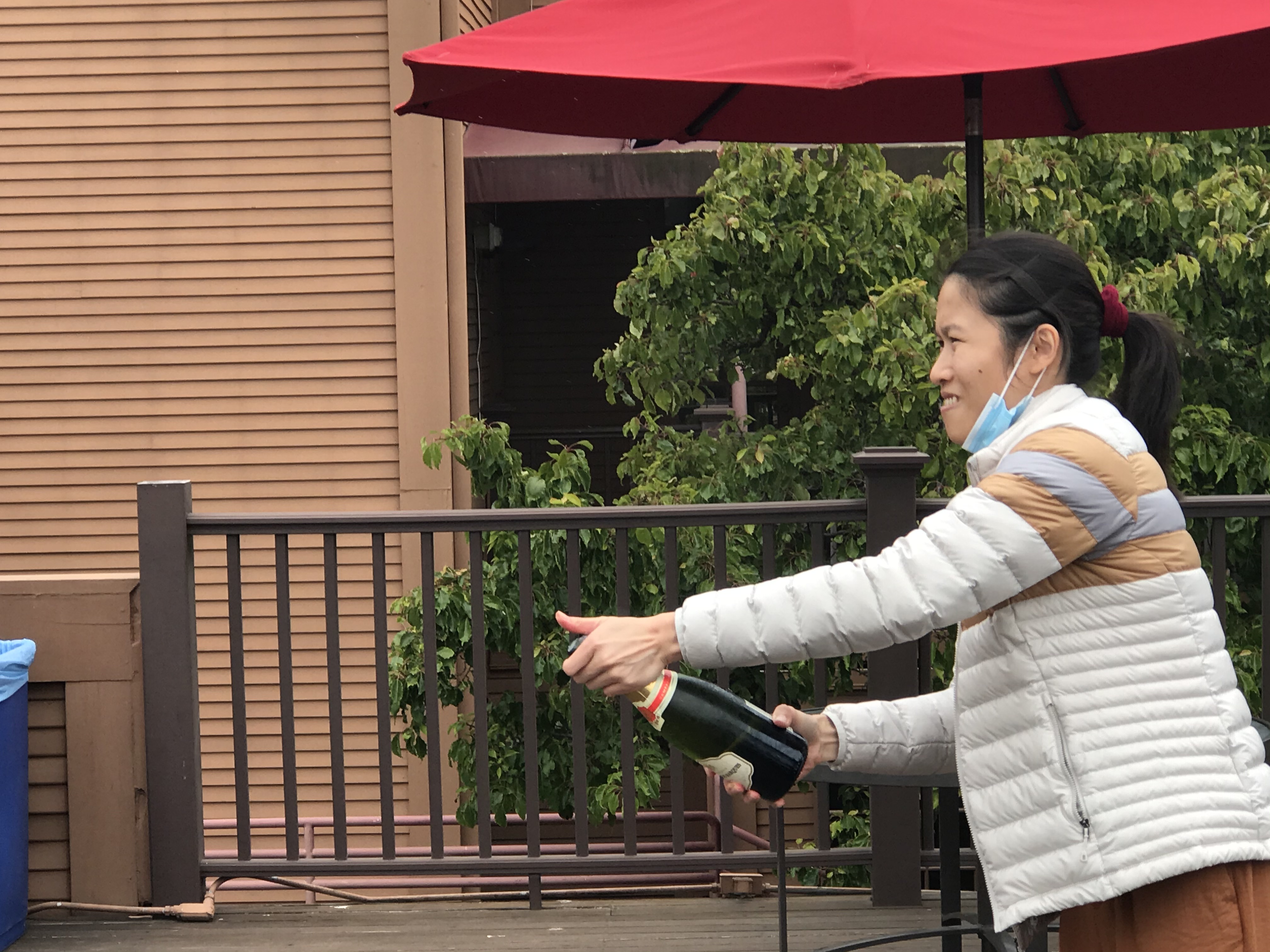
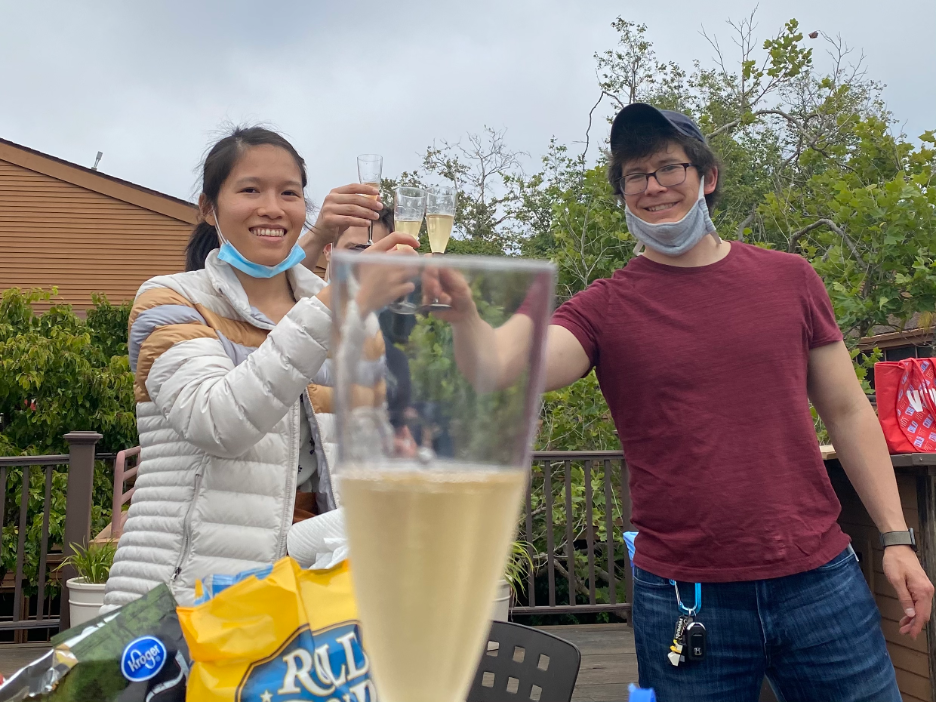
On a whirlwind of a day, Andrew successfully defended his thesis over Zoom, dropped by campus for his champagne toast, and then hit the road for the transcontinental drive back to his hometown of Philadelphia. Starting next week, Andrew will begin his career as a consultant at Boston Consulting Group. We’re so grateful for your many contributions to the lab and proud of your accomplishments, Andrew. Good luck on this next adventure!
The final version of our manuscript describing the palladium-catlayzed enantioselective 1,2-arylfluorination of alkenes using a transient directing group (TDG) strategy is online today in J. Am. Chem. Soc. In the study we apply Design of Experiments (DoE) to optimize this challenging three-component coupling of alkenes, arylboronic acids, and [F+] electrophiles, which helps to account for the complex interactions between variables in this system. We further elucidate the reaction mechanism using reaction progress kinetic analysis (RPKA). In terms of preparative applications, the method proceeds in high ee and d.r., allowing formation of full substituted C(sp3)–Ar and C(sp3)–F centers. The transformation is the first time that 1,2-difunctionalization has been achieved using a TDG approach and as such represents an important milestone for our lab and for the field. Hats off to Zhonglin, Luke, Mingyu, Zi-Qi, Van, and Yang!
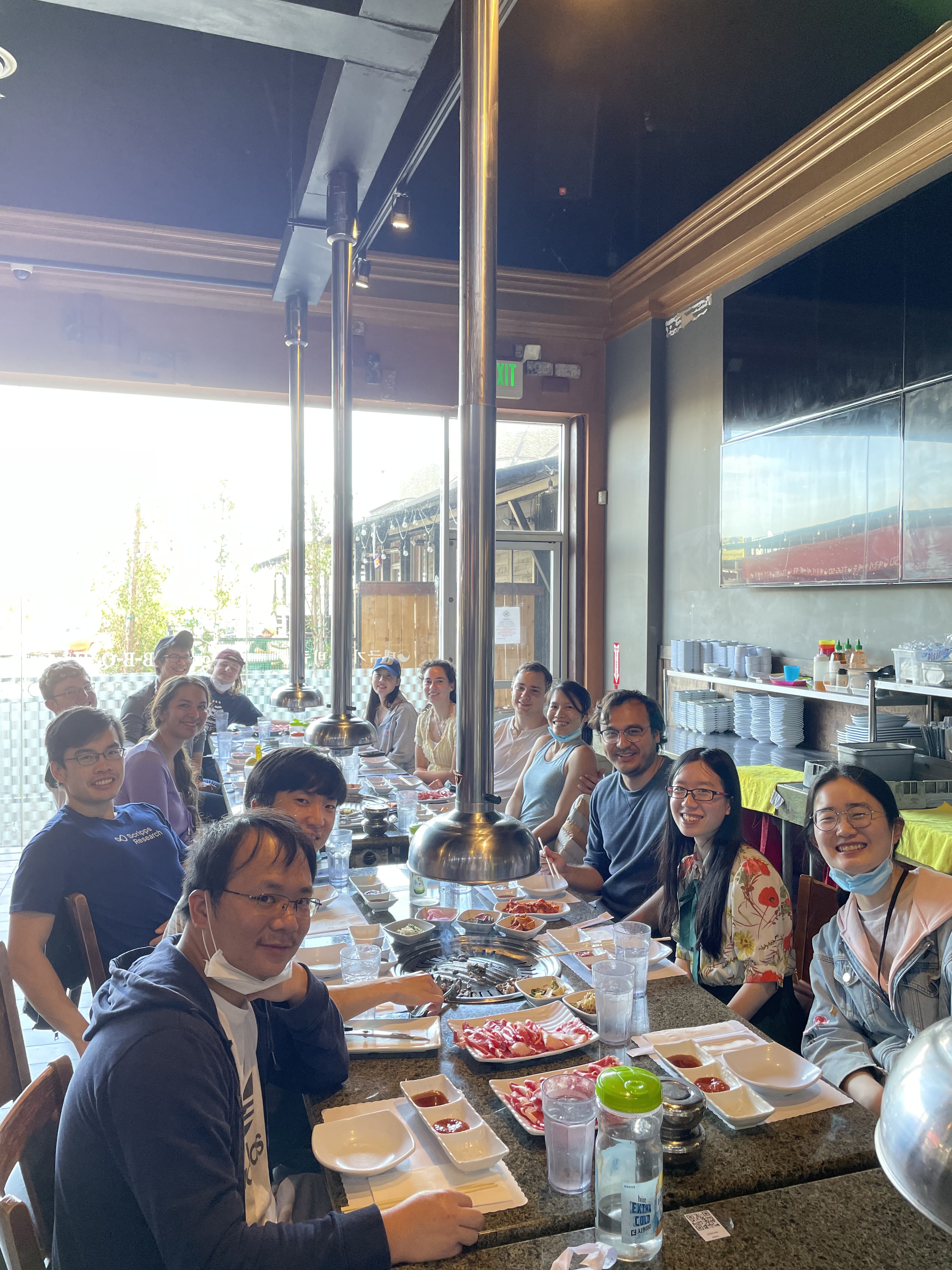
With the lab fully vaccinated we were very happy to be able to give Dr. Van Tran a proper send off, including a Korean BBQ trip and a champagne toast. Best of luck in your next adventure as a process chemist at Gilead, Van! We miss you already.
In a pre-print appearing today on ChemRxiv, we provide a full account of our efforts to develop substrate-directed Markovnikov-selective hydroarylation/alkenylation of terminal alkenes with organoboronic acids under nickel(0) catalysis. In the paper, we tackle three important substrate classes, alkenyl sulfonamides, ketones, and amides, and discuss the systematic tuning of reaction conditions that is required to provide high yields in each case, reflecting subtle yet significant differences in coordination chemistry among the directing groups involved. Through a combination of isotope labeling, reaction kinetics, and density functional theory (DFT) calculations, we identified transmetalation as the turnover-limiting and selectivity-controlling step. Congrats to Zi-Qi, Omar, and Ruohan on this herculean effort.
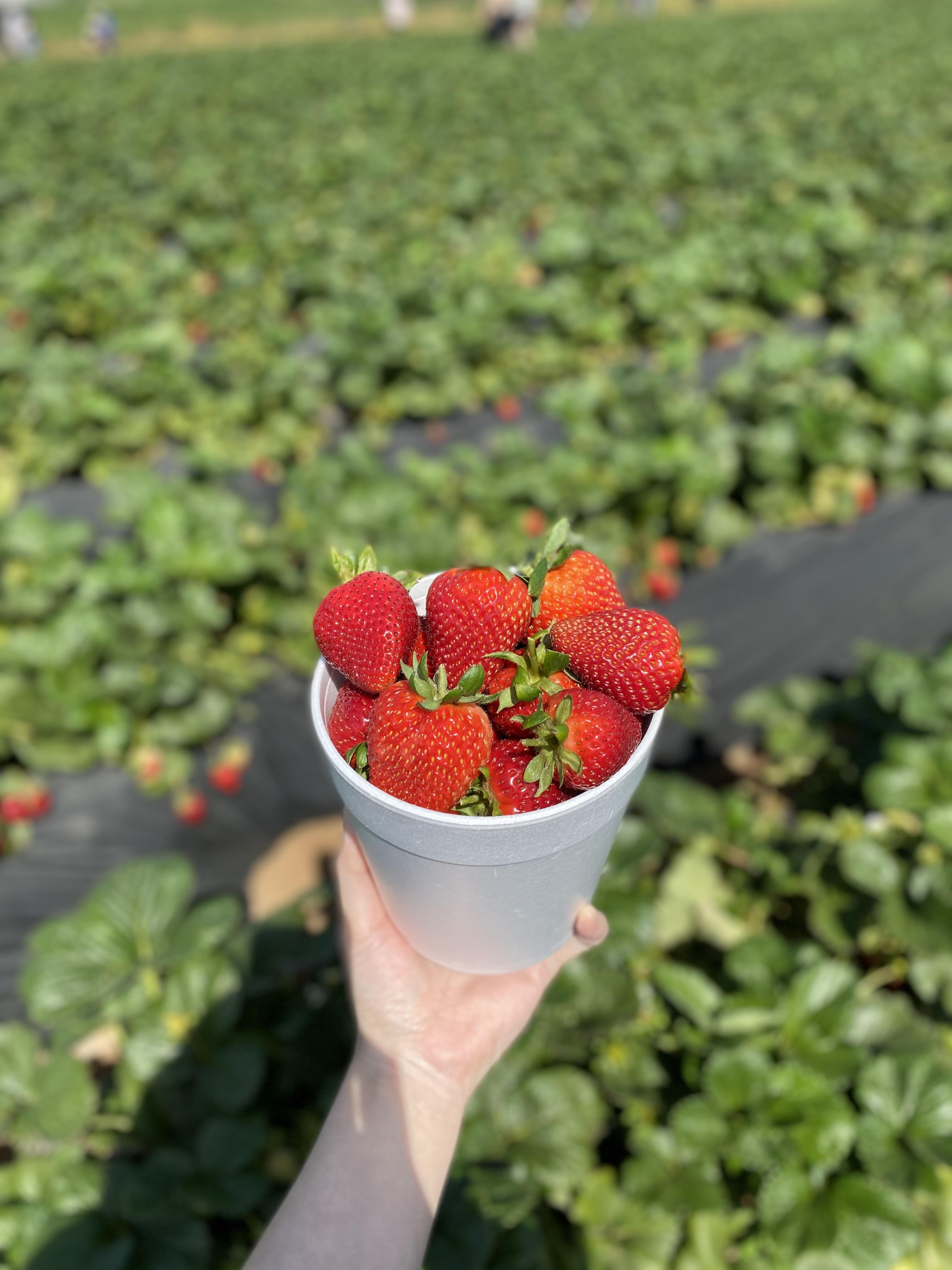
It has been a long time since we’ve been able to enjoy a group outing! This weekend, we did just that. We headed up to the Carlsbad Strawberry Company to get our fill of sunshine and fresh strawberries.
Congrats to G1 student Camille Rubel, who was awarded first place for her poster talk, “Stable Nickel Toolkit,” describing our lab’s work to develop convenient and bench-stable low-valent nickel complexes for use in catalysis to a diverse audience from the local San Diego community. The Scripps Research Community Symposium, which was held on Saturday, May 1st, invites the community — K-12 teachers, high school students, families with children, community college students, and more — to meet our scientists, hear from our graduate students, and interact with our science in fun and engaging ways.
As part of the Organometallic Solutions to Challenges in Cross-Coupling special issue in Organometallics, our lab reports an usual rearrangement process triggered by addition of Pd(TFA)2 to alkenes containing a benzothiazole thioether (BT(S)) directing group. The transformations furnishes a structurally family of previously unknown tetrahydrothiophene-functionalized N,S-heterocyclic carbene palladium(II) complexes that are catalytically active in various C–C coupling reactions. Congrats to grad student Andrew, former high school intern Matt, as well as our treasured X-ray crystallography collaborators Milan and Arnie from UCSD.