2022 Engle Lab Holiday Party

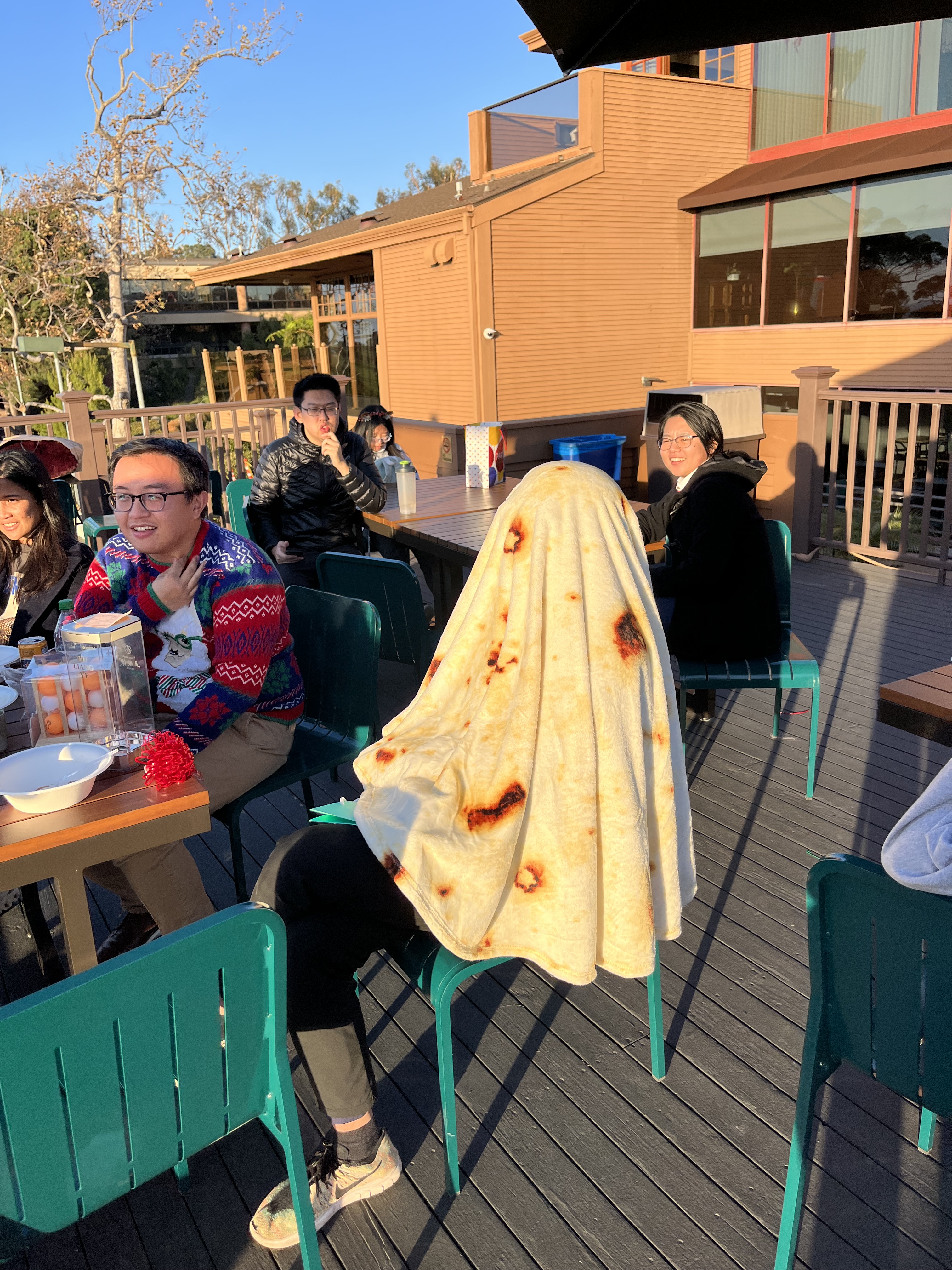
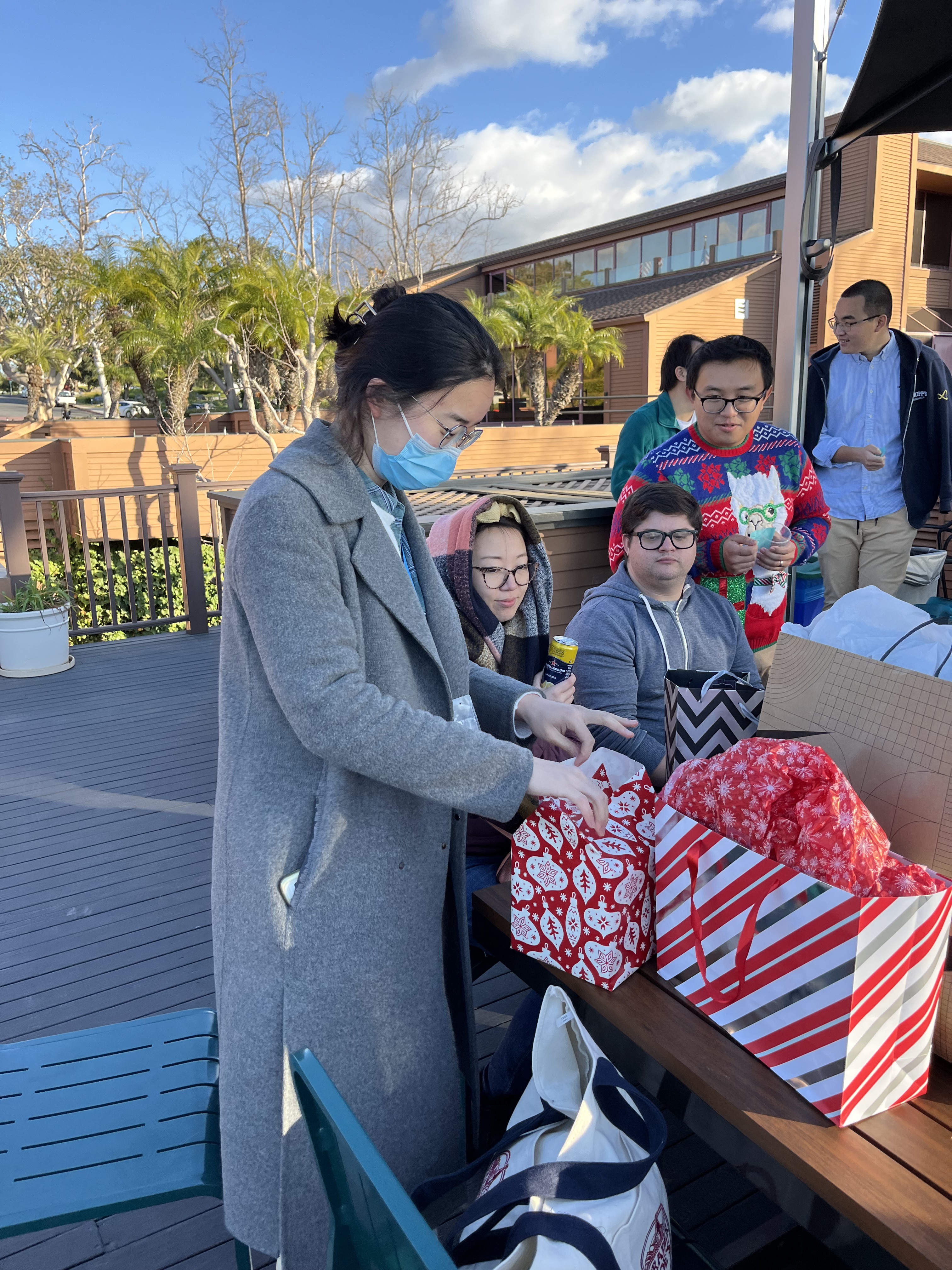
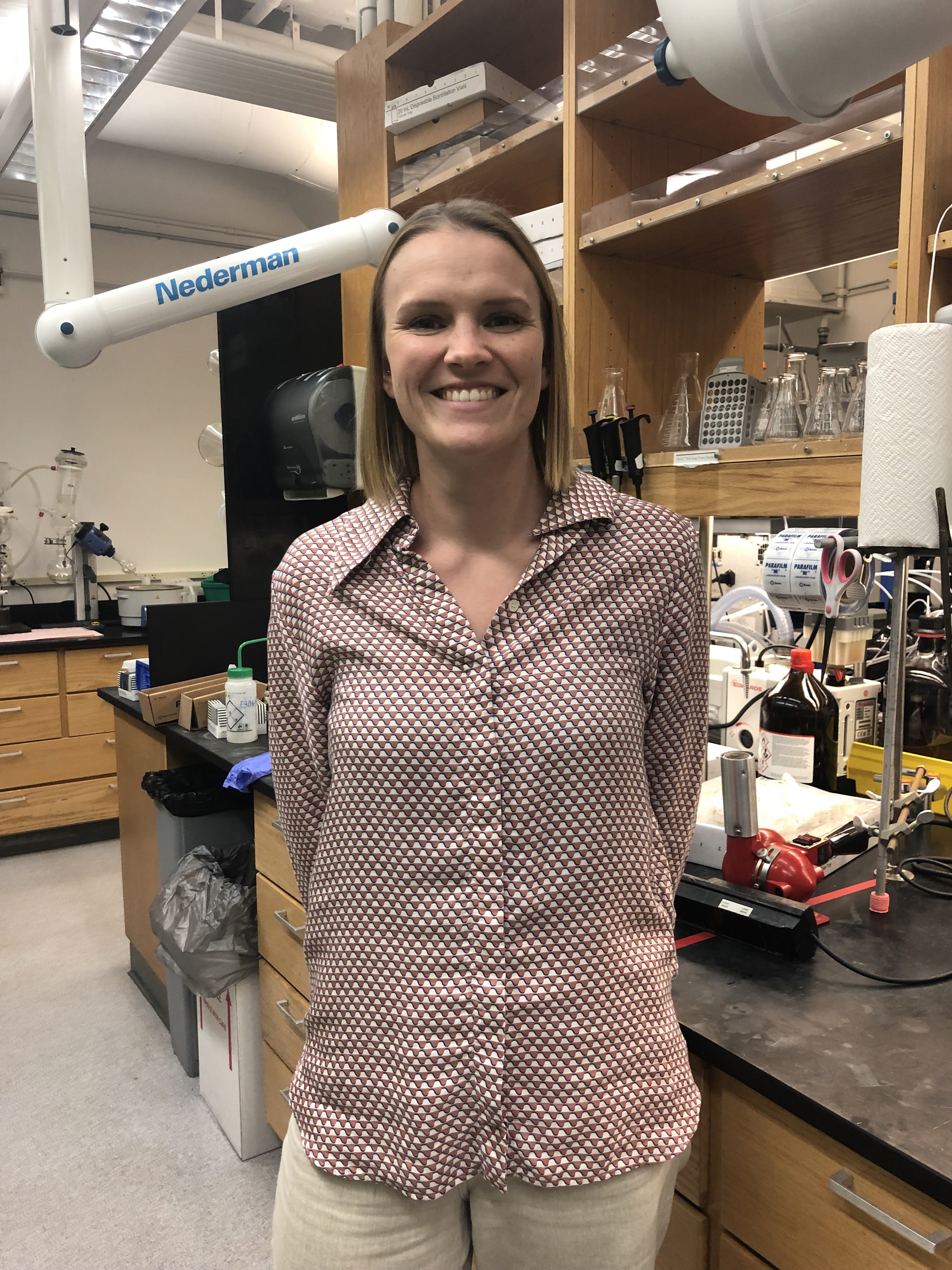
As per tradition, we celebrated the end of the year in style with tasty food, a fun white elephant gift exchange, and great company. Johny stole the show fashion-wise with his llama-themed sweater, and the burrito blanket was the hottest gift of the lot. Wishing everyone a magical holiday seasons, and looking forward to another great year to come in 2023!

Nickel(0) precatalyst toolkit paper – Now in press in Angewandte Chemie

The final version of our manuscript describing the development of a toolkit of bench-stable Ni(0) precatalysts for diverse organic transformations is now in press in Angewandte Chemie. This toolkit enables reactions reliant on air-stable Ni(0) sources such as Ni(COD)2 to be performed without an inert atmosphere glovebox using standard Schleck techniques, offering a path forward for commercial scale-up of such catalytic methods. This work was made possible through a large network of collaborators at Scripps Research, USCD, Cornell, and Bristol Myers Squibb.

For coverage of this work in C&E News, see: https://cen.acs.org/acs-news/acs-meeting-news/Nickel-tamed-reagent-toolkit/100/i11

For a link to the paper in Angewandte Chemie, click here: https://onlinelibrary.wiley.com/doi/10.1002/anie.202211794

As a reminder, a pre-print of this work was uploaded to ChemRxiv back in February: https://onlinelibrary.wiley.com/doi/10.1002/anie.202214153

Elusive Intermediates Captured in Latest Pre-Print

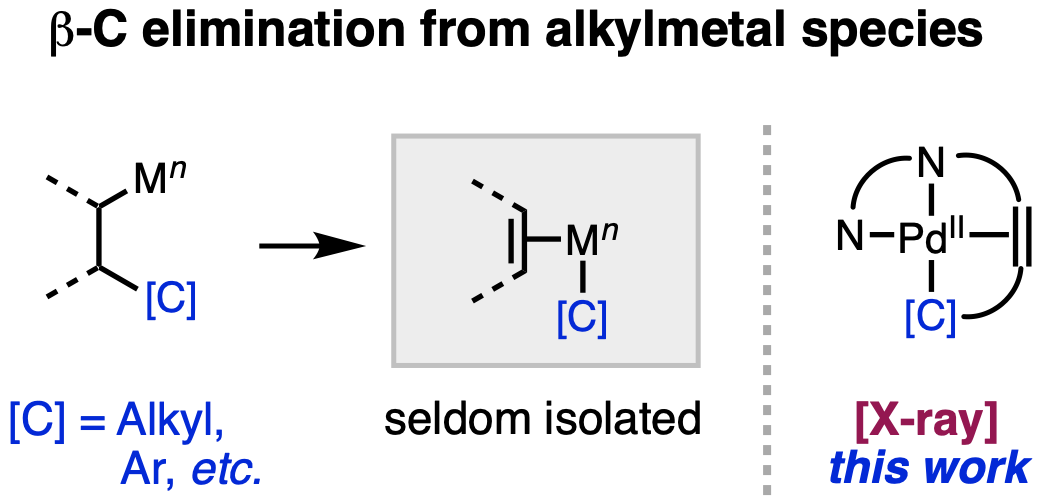
During the past few years, numerous synthetic methods have been developed that take advantage of catalytic C–C bond cleavage via β-C elimination from an alkylmetal intermediate to furnish a new PdII(olefin)(R) (R = Alkyl, Aryl, etc.) species. Nevertheless, igorous characterization of said post-β-C-elimination organometallic species has proven elusive. In collaboration with the Liu group at the University of Pittsburgh and the X-ray crystallography facility at UCSD, we have successfully synthesized well-defined post-β-C-elimination organopalladium complexes, enabled by a combination of strain-release to provide thermodynamic driving force and chelation stabilization to suppress potential side reactions. The complexes were characterized by single-crystal X-ray diffraction, and the potential energy surface of the β-C elimination step and other relevant processes was computed using density functional theory. Congrats to Taeho, Rei, Anna, and Tanner from Scripps Research; Yue from Pitt; and Arnie, Jake, and Milan from UCSD.

For a link to the pre-print in ChemRxiv, click here: https://chemrxiv.org/engage/chemrxiv/article-details/635875afca86b8d57fc36848

Halloween 2022!

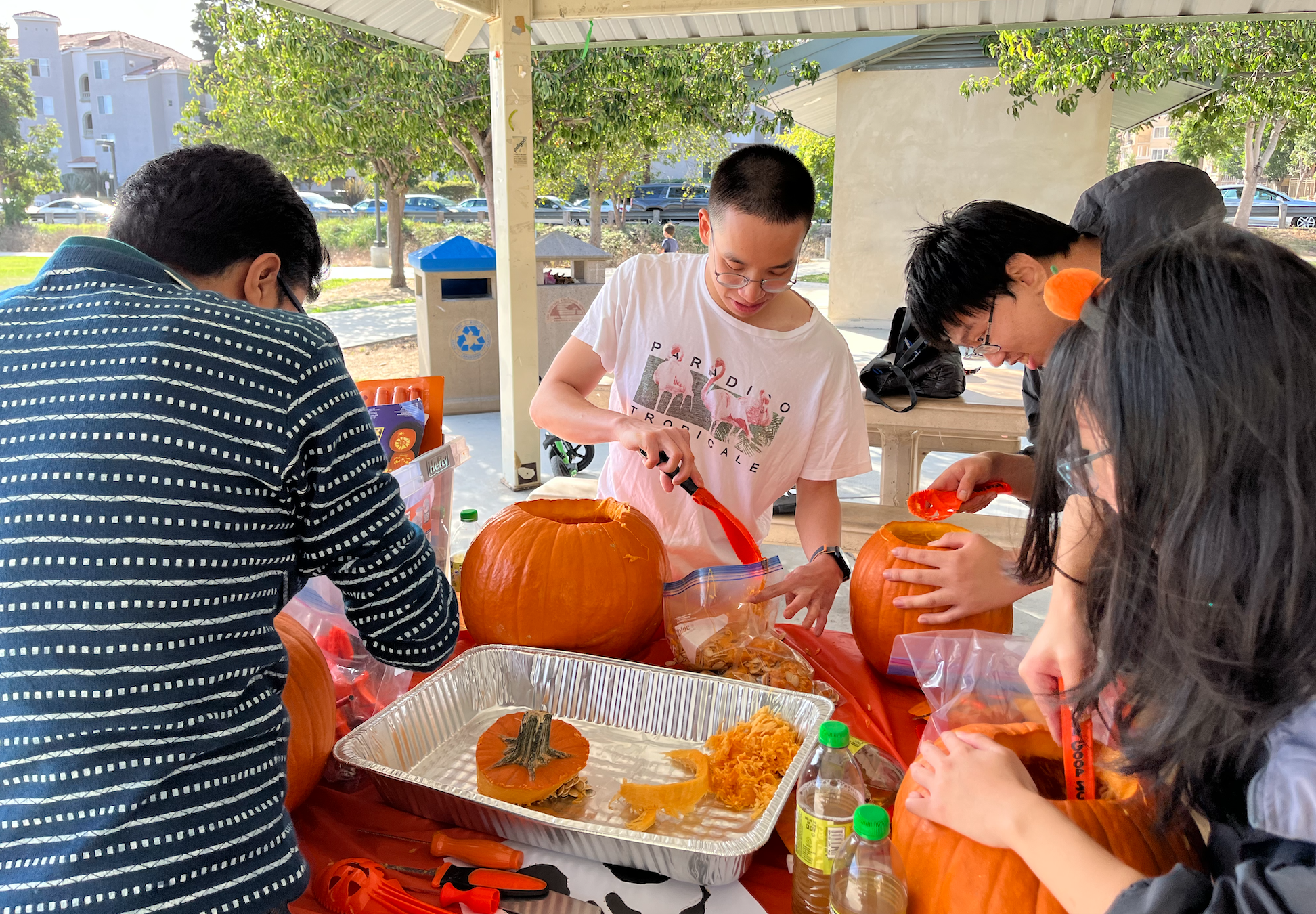
What a treat seeing our artists go all out for the annual halloween pumpkin carving party and potluck! Kudos to everyone for making this event special! Also, we all decided to dress up like our fearless leader!

Nitroalkane Addition to Unactivated Alkenes – Manuscript in Press at ACS Catalysis

Our recent study describing the palladium(II)-catalyzed coupling of nitroalkanes and unactivated alkenes has been accepted and appears online today in ACS Catalysis. We describe how the combination of PdI2 as catalyst and HFIP as solvent is uniquely effective in enabling this historically challenging coupling process. The method allows for simple readily accessible starting materials to be elaborated into densely functionalized nitroalkane products, which can then be further derivatized as desired. Teaming up with our computational collaborators from the Liu group at the University of Pittsburgh, we describe how the carbopalladation transition state is stabilized by a Na···I interaction and an H···I hydrogen bond with HFIP. Congrats to Amit, Por, Hui-Qi, and John from our group; and Turki and Binh from the Liu group on this study.

To read the peer-reviewed paper in ACS Catalysis, click here: https://pubs.acs.org/doi/10.1021/acscatal.2c04557

As a reminder, a pre-print describing this transformation first appeared in ChemRxiv back in February: https://chemrxiv.org/engage/chemrxiv/article-details/61f8af581fd27415ef2206d7

Enantioselective Ni-Catalyzed Dicarbofunctionalization – Now in Press at JACS

Today’s second paper from the group appears in the Journal of the American Chemical Society and describes the first enantioselective nickel-catalyzed 1,2-dicarbofunctionalization of unactivated alkenes involving a closed-shell pathway. Key to the success of the transformation is the combined use of a sterically bulky monodentate sulfonamide directing group and a chiral hemi-labile bioxazoline (Bn-biOx) ligand, which work together during enantiodetermining arylnickel migratory insertion. This was a massive undertaking that spanned three years and involved collaborators from Scripps (Omar, Taeho, Pranali, Camille, Joe, Brittany, Quynh, Emily, and Jason), University of Pittsburgh (Turki), and Bristol Myers Squibb (Steve). Congrats to everyone on a great team effort!

Click here for a link to the paper in J. Am. Chem. Soc.: https://pubs.acs.org/doi/10.1021/jacs.2c06636

As a reminder, an initial pre-print describing this work first appeared in ChemRxiv back in June: https://chemrxiv.org/engage/chemrxiv/article-details/62b40edc0bbbc1d407726e34

Palladium-catalyzed 1,2-carbofluorination paper – In Press at Angewandte Chemie

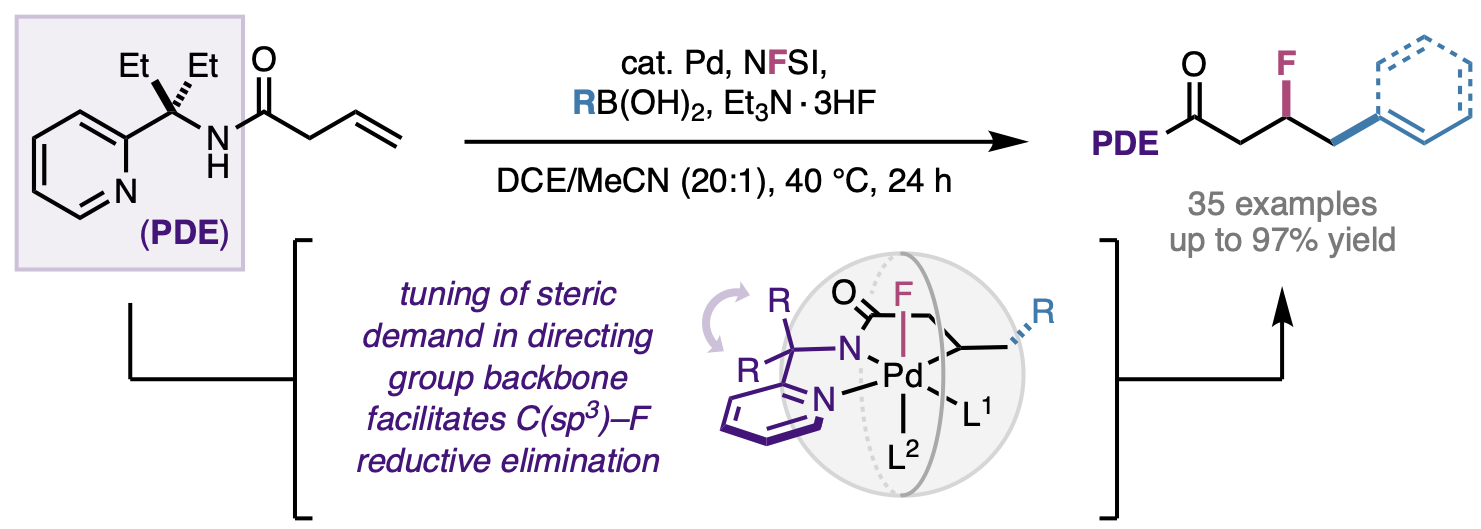
In the first of two papers appearing in final peer-reviewed form today, we report a new method for 1,2-carbofluorination of unactivated alkenes under Pd(II)/Pd(IV) catalysis in Angewandte Chemie International Edition. This new method is enabled by a unique sterically bulky gem-diethyl pyridyl amine directing group that coordinates to the palladium(II) catalyst in a bidentate fashion, controlling the regioselectivity of migratory insertion and promoting C(sp3)–F reductive elimination. The method can tolerate different substitution patterns of the alkene as well as a broad scope of aryl- and alkenylboron coupling partners. Congrats to entire team: Zhonglin, Luke, Juntao, Zi-Qi, and Nana from Scripps; and Geraint from BMS Discovery Chemistry.

For a link to the paper in Angewandte Chemie International Edition, click here: https://onlinelibrary.wiley.com/doi/10.1002/anie.202214153

As a reminder, this work was first described in a ChemRxiv pre-print back in April: https://chemrxiv.org/engage/chemrxiv/article-details/62608592d048ed03304b657d

Wishing you the best Por!

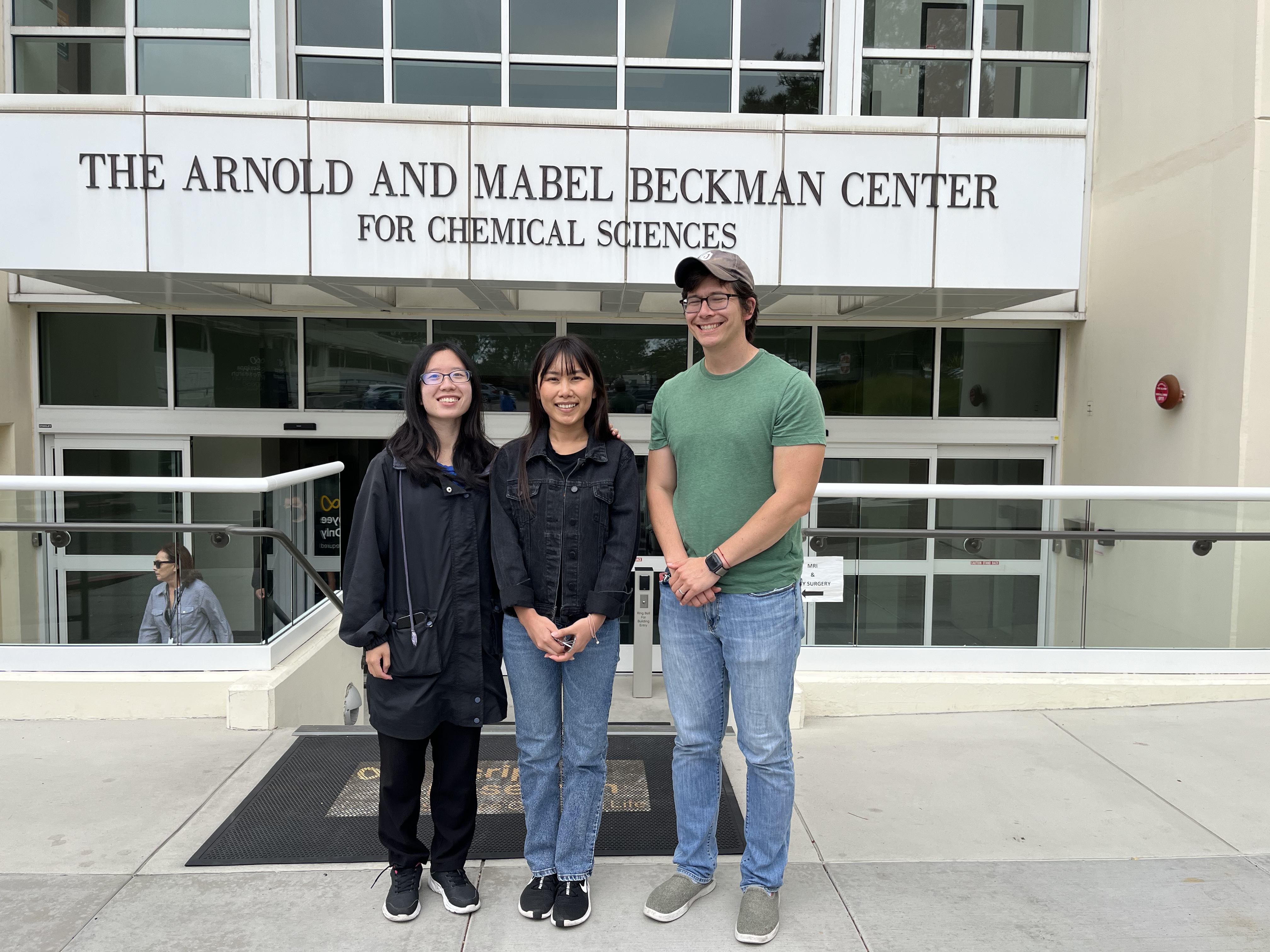
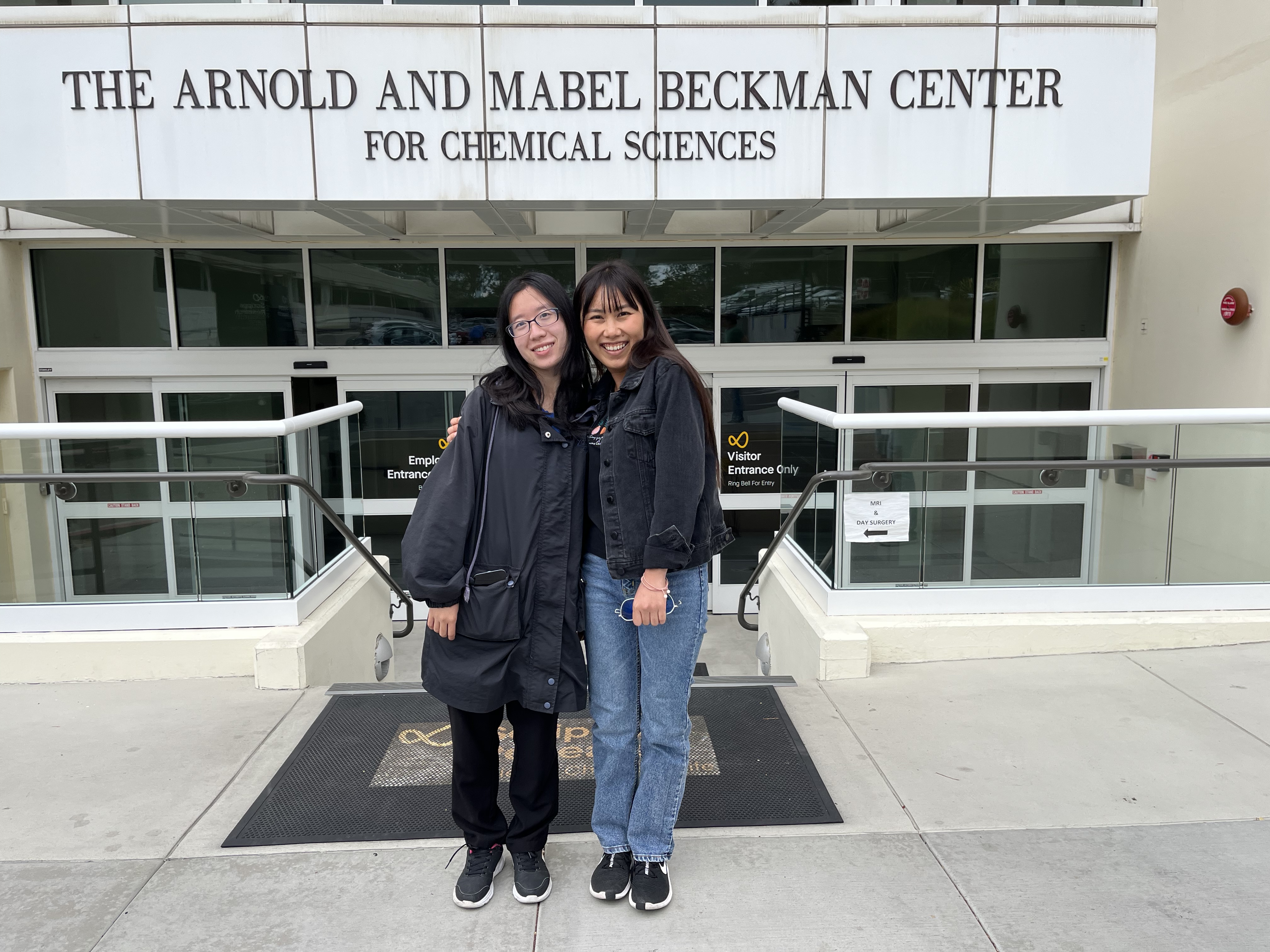
Today we bid farewell to Warabhorn (Por) Rodphon, who has finished her full-year internship in our lab. We were very happy to be able to give Por a proper send off, including a ramen trip! Best of luck in your next adventure and we can’t wait to see all of your accomplishments! We miss you already!