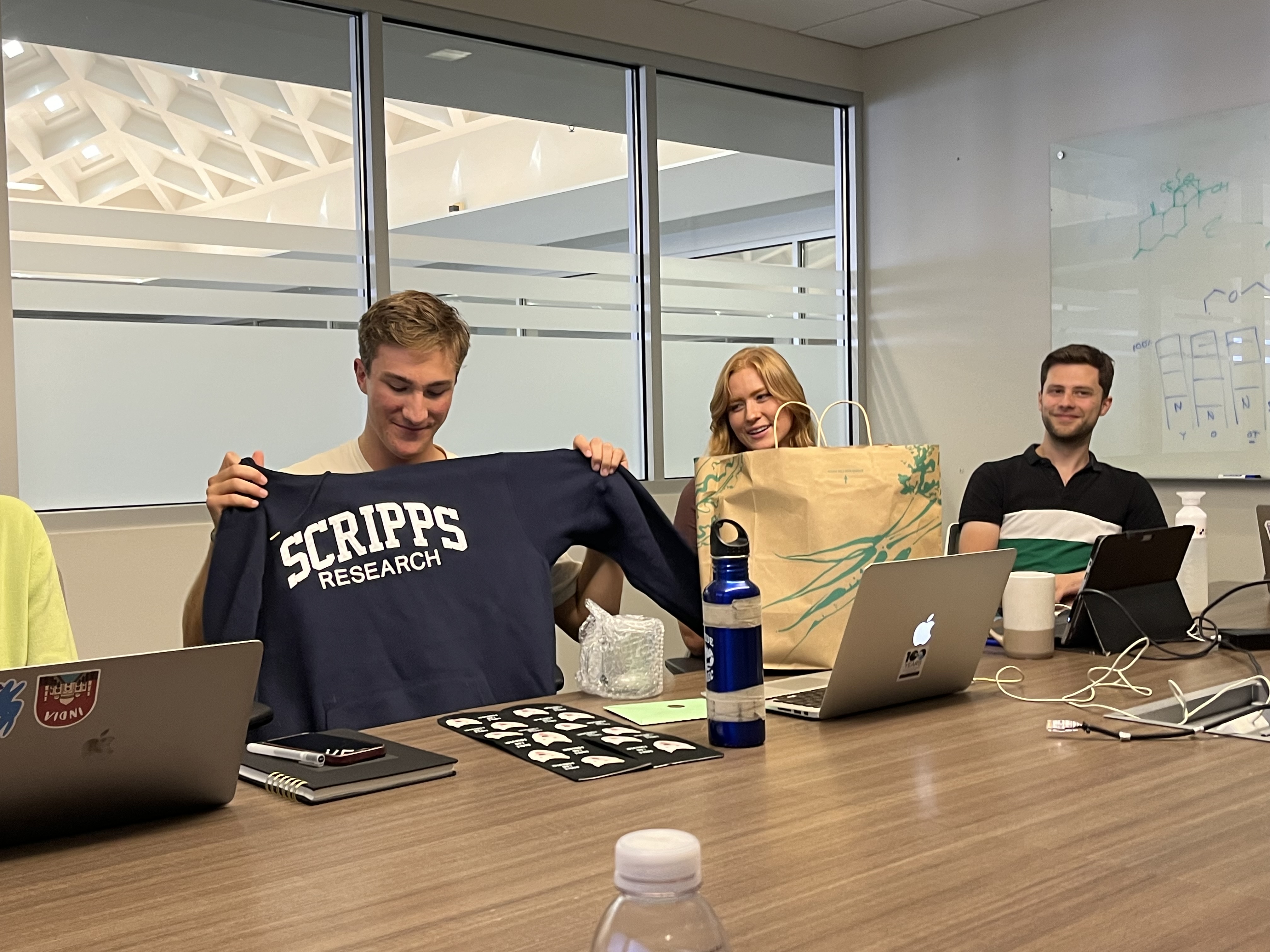
Collaborative study on molecular glues now online as pre-print

We joined forces with the lab of Prof. Michael Erb, star postdoc Dr. Jamie Schaum, and a team of chemical biologists in and outside of Scripps Research on a study detailing how to leverage high-throughput chemistry to convert existing ligands for proteins of interest into molecular glues. In this study, we were able to put our new pre-catalyst, Pd(COD)(DQ), to good use in a challenging C–N coupling reaction. Congrats to all of the co-authors on a great collaborative study!

For a link to the pre-print in BioRxiv, click here: https://www.biorxiv.org/content/10.1101/2024.09.30.615685v1
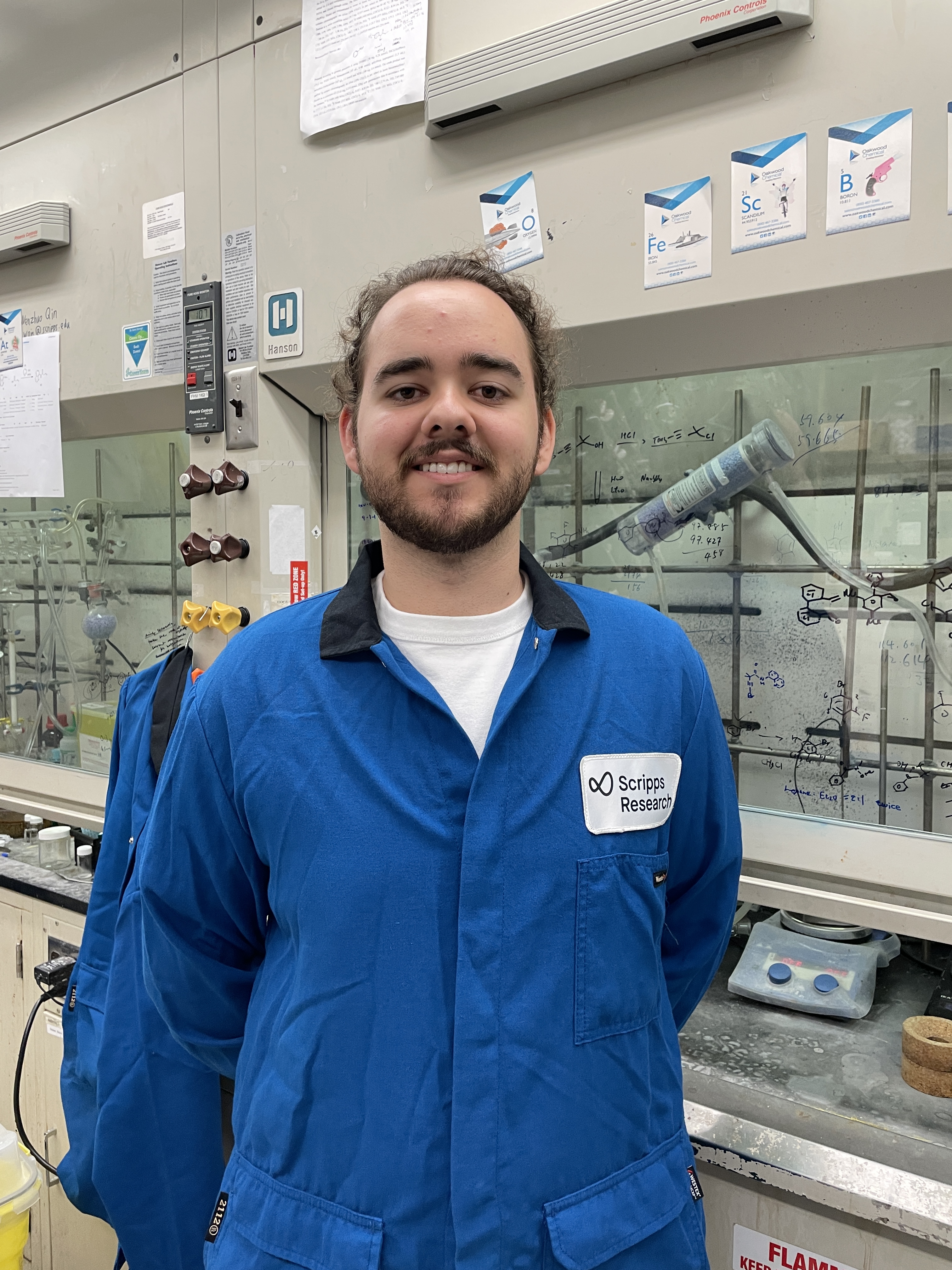
Evan joins the lab as a postbac

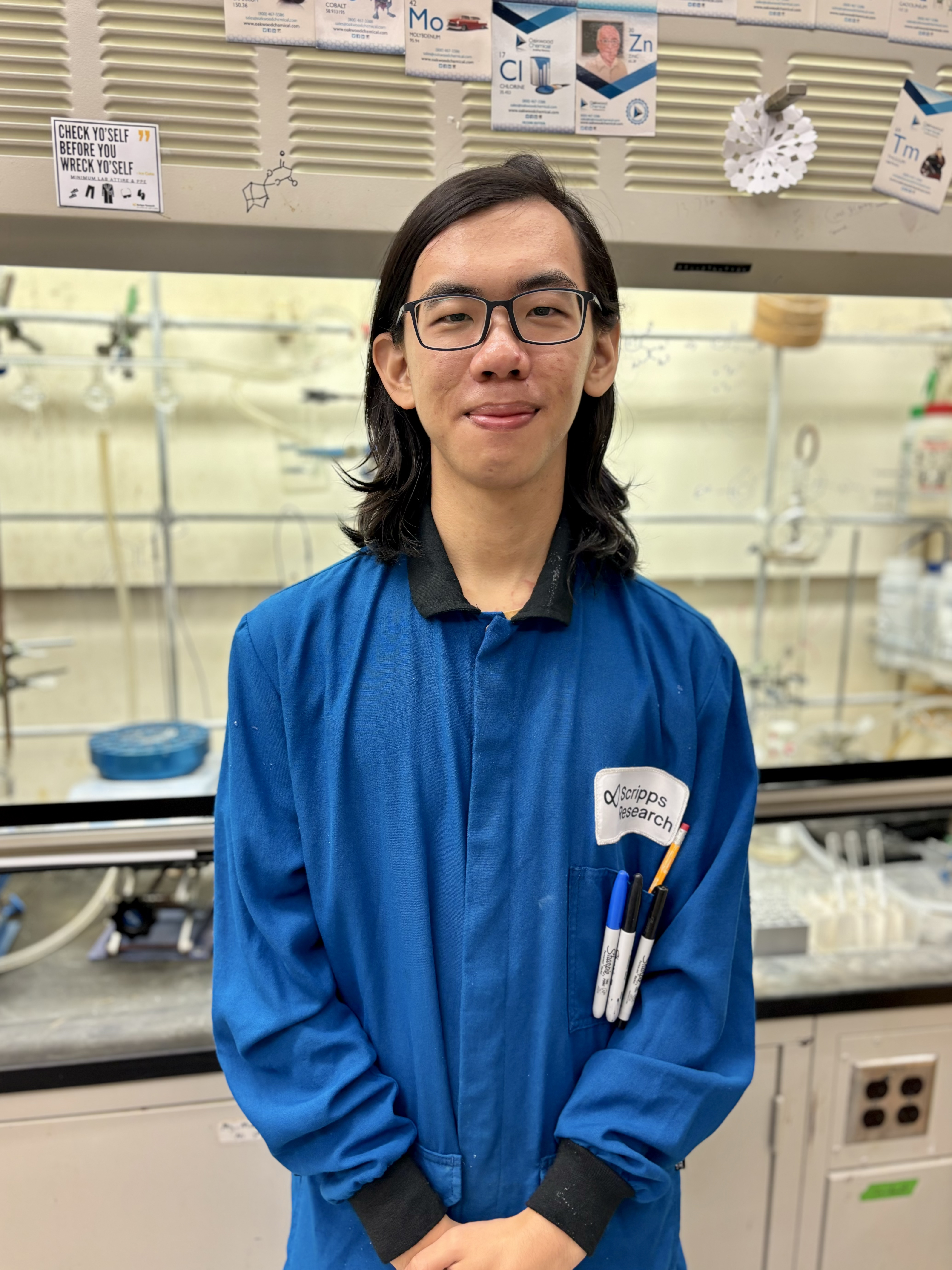
After completing his undergrad degree at Columbia University, San Diego native Evan Morgan joins as the Engle lab’s newest member. At Columbia, Evan gained a diverse set of research experiences in geochemistry and organic chemistry with Profs. Benjamin Bostick and Tom Rovis. In the Engle lab, Evan will pursue research in organometallic catalysis for a year before graduate school. Welcome Evan!

Air-stable catalytic copper-hydride cluster – Pre-print available online

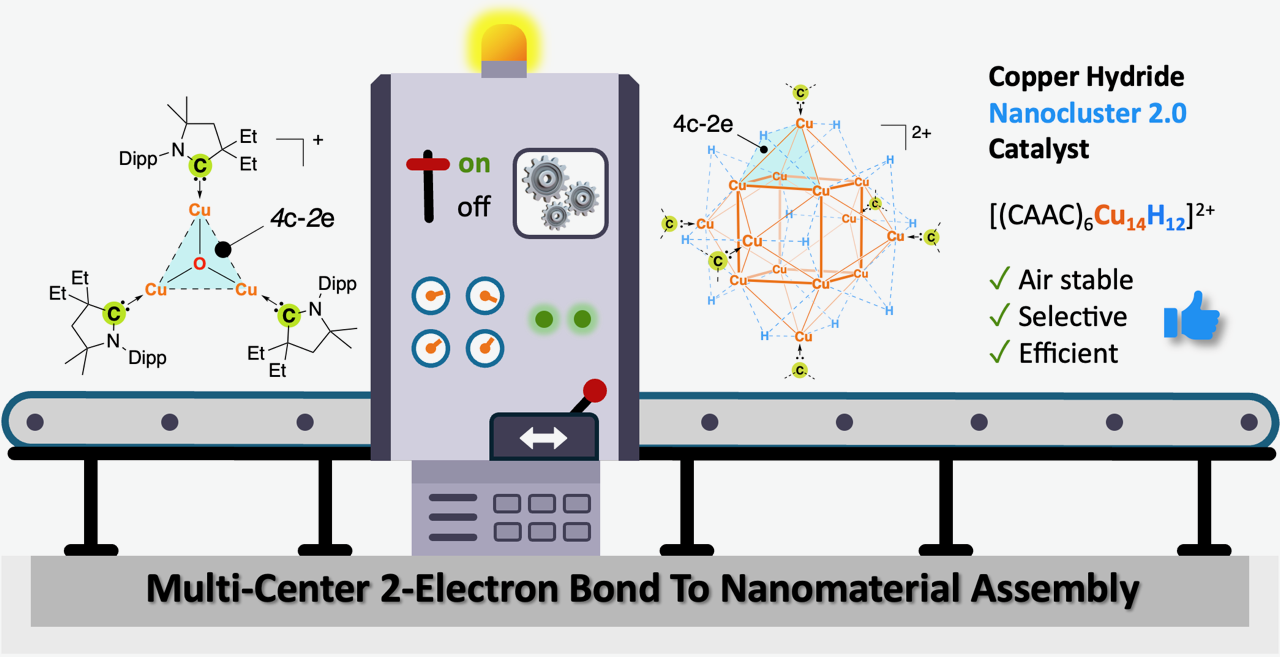
Together with the labs of Rodolphe Jazzar (UCSD/CNRS) and Pierre-Adrien Payard (Université Claude Bernard Lyon), this week we report a bench-stable CuH cluster inspired by Stryker’s reagent.

Multicenter-2-electron bonds play a pivotal role in templating cluster assembly during synthesis, allowing incorporation of the CAAC ligand. The pronounced stability of the cluster arises from attenuated hydride mobility, as probed by experiment and theory. This great team effort spanned three institutions and was led by Quentin (Lyon), Skyler Mendoza (Scripps Research), and Jesse Peltier (UCSD).

For a link to pre-print on ChemRxiv, click here: https://chemrxiv.org/engage/chemrxiv/article-details/66c3a7fd20ac769e5f193252

Keary receives 2025 Cope Scholar Award

Huge congrats to Keary, who was recognized today as one of two recipients of the 2025 Arthur C. Cope Early Career Scholar Award. Keary will deliver an award address at the 2025 Arthur C. Cope Symposium at the ACS Fall National Meeting in Washington, DC, along with the other nine Arthur C. Cope Scholars spanning early-, mid-, and late-career categories.

For the announcement in C&E News, click here: https://cen.acs.org/acs-news/ACS-announces-2025-National-Award/102/i27

For more information about the Arthur C. Cope Scholar Award, click here: https://www.acs.org/funding/awards/arthur-cope-scholar-award.html

Anti-cyclopropanation method – Now in Press in J. Am. Chem. Soc.

The final, peer-reviewed version of our study describing a new method to form cyclopropanes from unactivated olefins and 1,3-dicarbonyl compounds under Pd(II)/Pd(IV) catalysis is online this week in J. Am. Chem. Soc. Owing to its unique mechanism, the method gives an unusual stereochemical outcome in which the 1,3-dicarbonyl adds to opposite faces of the C–C π-bond. Congrats to the team of collaborators from Scripps Research, University of Pittsburgh, Purdue University, and Pfizer!

For a link to the paper in J. Am. Chem. Soc., click here: https://pubs.acs.org/doi/10.1021/jacs.4c07039

As a reminder, an earlier version of this paper was published as a pre-print in ChemRxiv in February 2023: https://chemrxiv.org/engage/chemrxiv/article-details/641a9863dab08ad68f818947

Ruchira and Calise complete SURF internships

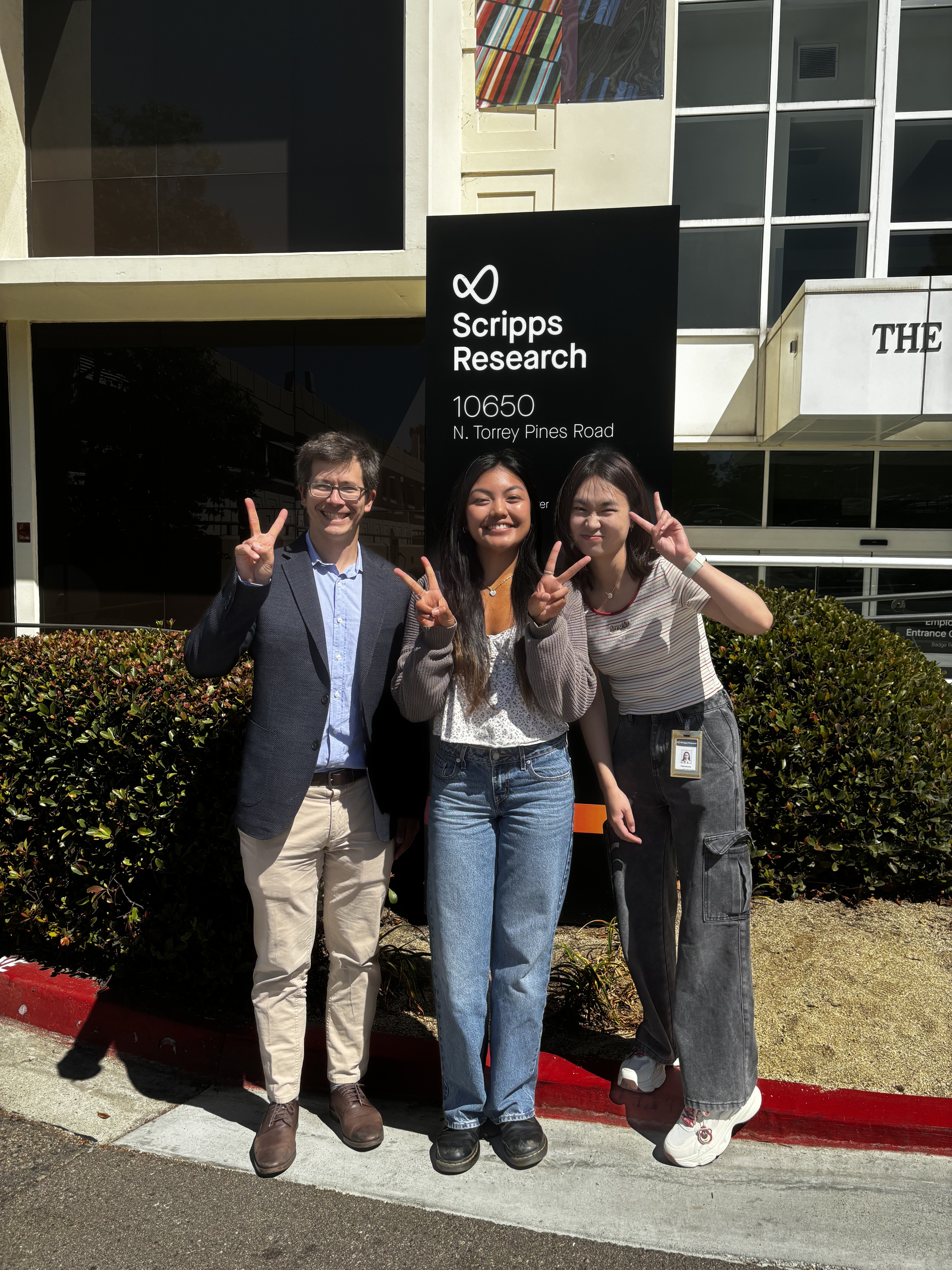
All good things must come to an end, and so too must the SURF program! We had so much fun hosting Ruchira and Calise this summer, so it’s bittersweet to see them wrap up their internships and return to Ithaca and Santa Cruz, respectively. We can’t wait to see what lies ahead for both of you in graduate school and beyond!

New Approach to Diarylated Polymers Published in Nature Synthesis

Together with collaborators from the Gutekunst lab at Georgia Tech, the Liu lab at the University of Pittsburgh, and Bristol Myers Squibb, today we report a one-step approach towards 1,2-diarylated sequence-encoded monomers that can be controllably polymerized via ring-opening metathesis polymerization (ROMP). The method allows convenient access to otherwise inaccessible polymeric materials with the modularity inspired by classical cross-coupling. Congrats to the entire team: Van, Anne, and Camille from Scripps Research; Mizhi and Ethan from Georgia Tech; Yue from the University of Pittsburgh; and Steve from BMS!

For a link to the paper in Nature Synthesis, click here: https://www.nature.com/articles/s44160-024-00618-1

Palladium bisphosphine mono-oxide deep dive – pre-print now online

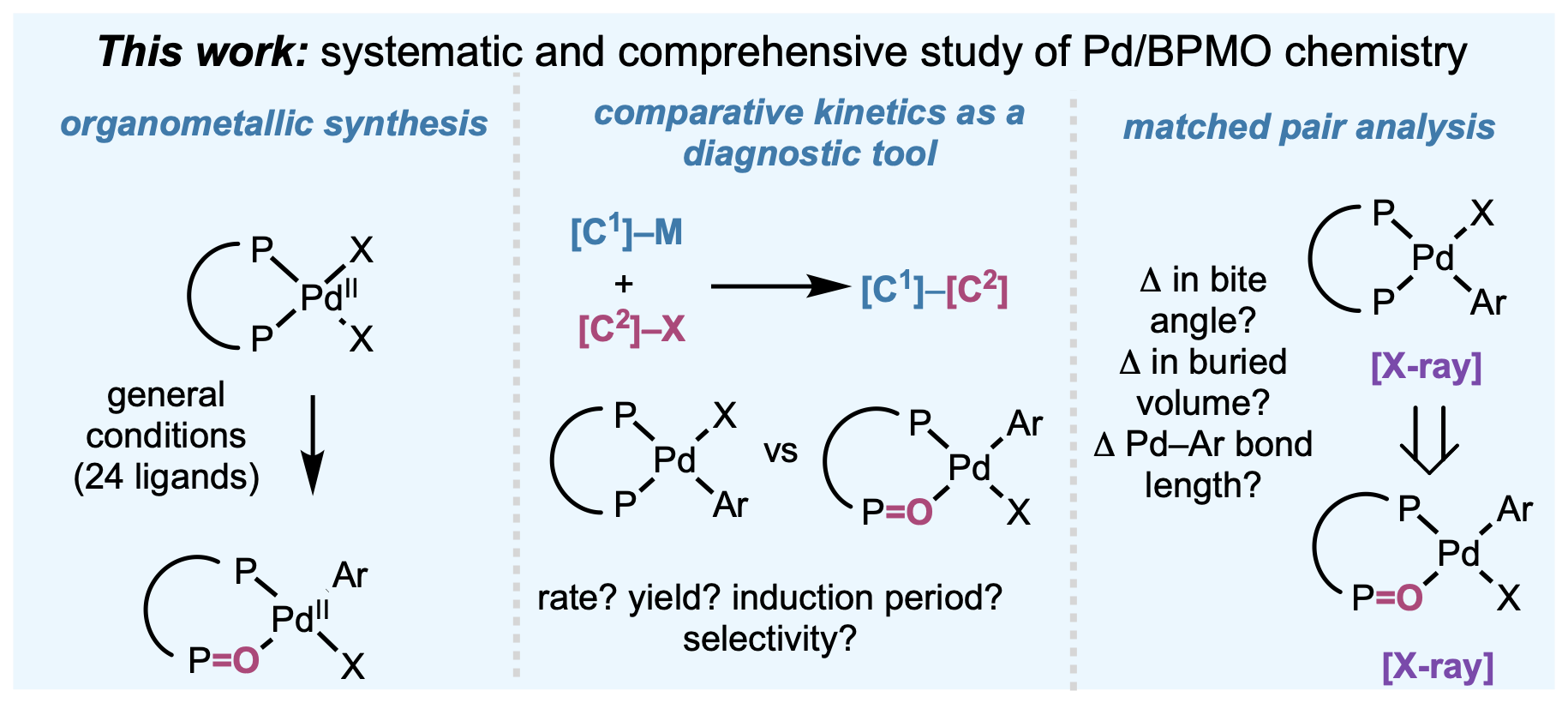
What is the active form of my catalyst for a given reaction of interest? This core question remains one of the most difficult to answer due to tendency of metals and ligands to change oxidation states in situ. Together with chemists at Bristol Myers Squibb and the Blackmond lab at Scripps Research, we undertook a systematic study of bisphosphine oxidation in palladium catalysis and its ramifications in coordination chemistry and catalysis. Led by G4 student Shenghua, this comprehensive study has something for everyone—organometallic synthesis, reaction kinetics, structural characterization, and density functional theory calculations!

For a link to the ChemRxiv pre-print, click here: https://chemrxiv.org/engage/chemrxiv/article-details/66aeabbd5101a2ffa809a6fa

New First-Year Graduate Students Arrive

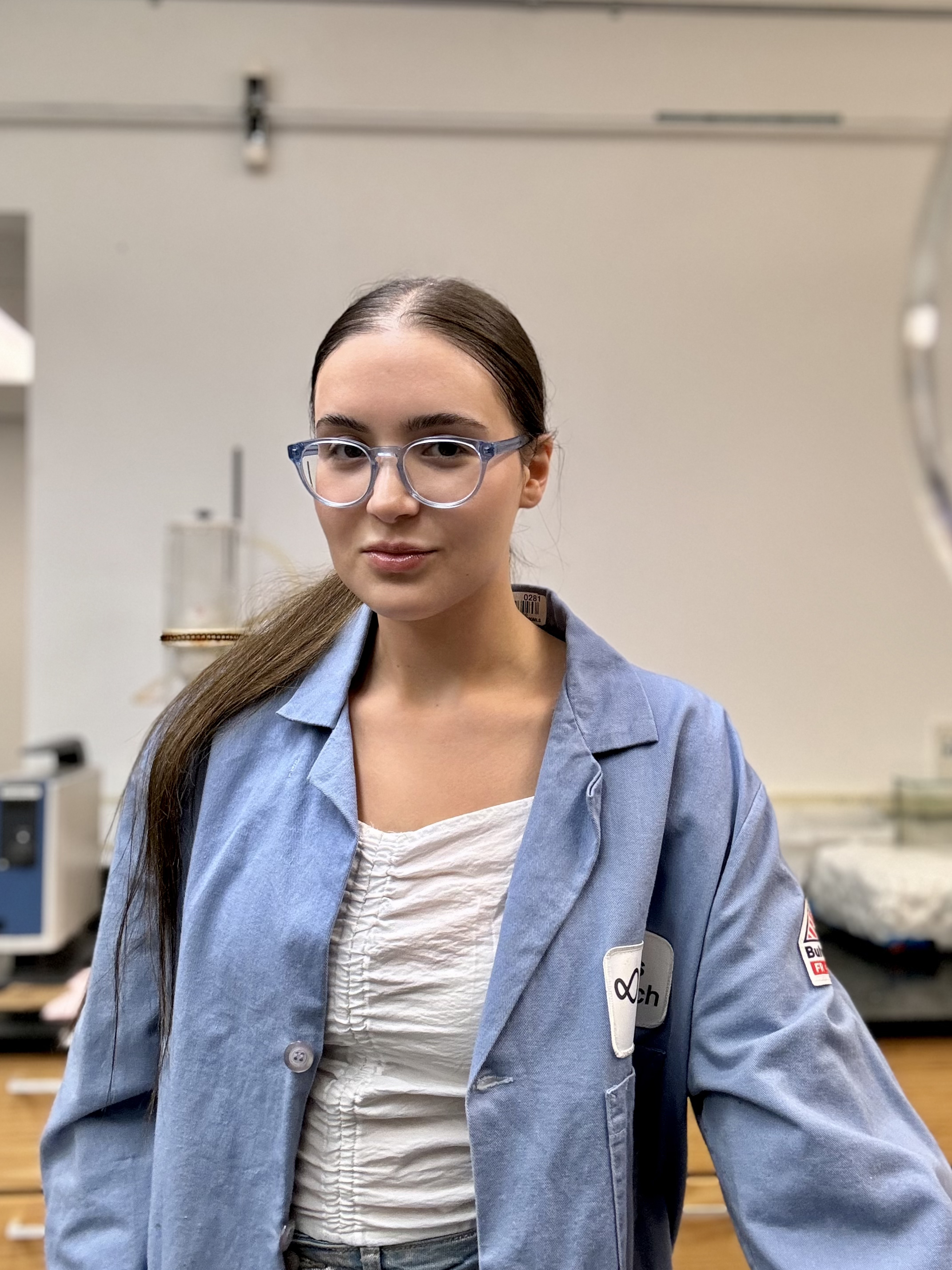
The Engle lab is pleased to welcome three new first-year graduate students, Françoise Aouane (ETH Zürich/HHU Düsseldorf), Aimee Schill (Brigham Young University), and Ningxi Song (National University of Singapore), who arrived in San Diego and started research in the lab this week. We are thrilled to have the chance to work with this talented bunch and eager to follow the exciting science they pursue.

High School Intern Luka Wraps up Summer Research

Luka Remec, a rising senior at Telluride High School in Telluride, CO, competed his summer research internship in the Engle lab this week. Luka’s internship was supported through the Pinhead Internship Program run through the Pinhead Institute. In the Engle lab, Luke worked under the mentorship of Madison developing alkyne diarylation methododology under palladium catalysis. After an awesome wrap-up talk, Luka will now head home for his senior year at Telluride High School and plans to pursue a STEM major in college next fall. Best of luck in your future endeavors, Luka!