
For the second year running, senior members of the Engle lab are organizing an Organometallics Bootcamp for incoming first-year grad students and visiting undergraduates in the Chemistry Department at Scripps Research. The 10-day bootcamp typically meets mornings from 9–10 AM along with some evenings, and it covers topics ranging from basic structure and bonding to state of the art cross-coupling methods. Bootcamp kicks off Wednesday morning at 8:30 am in the Library Training Room (404H). Please email keary@scripps.edu if you are interested in participating.
2019 *NSPIRE Symposium
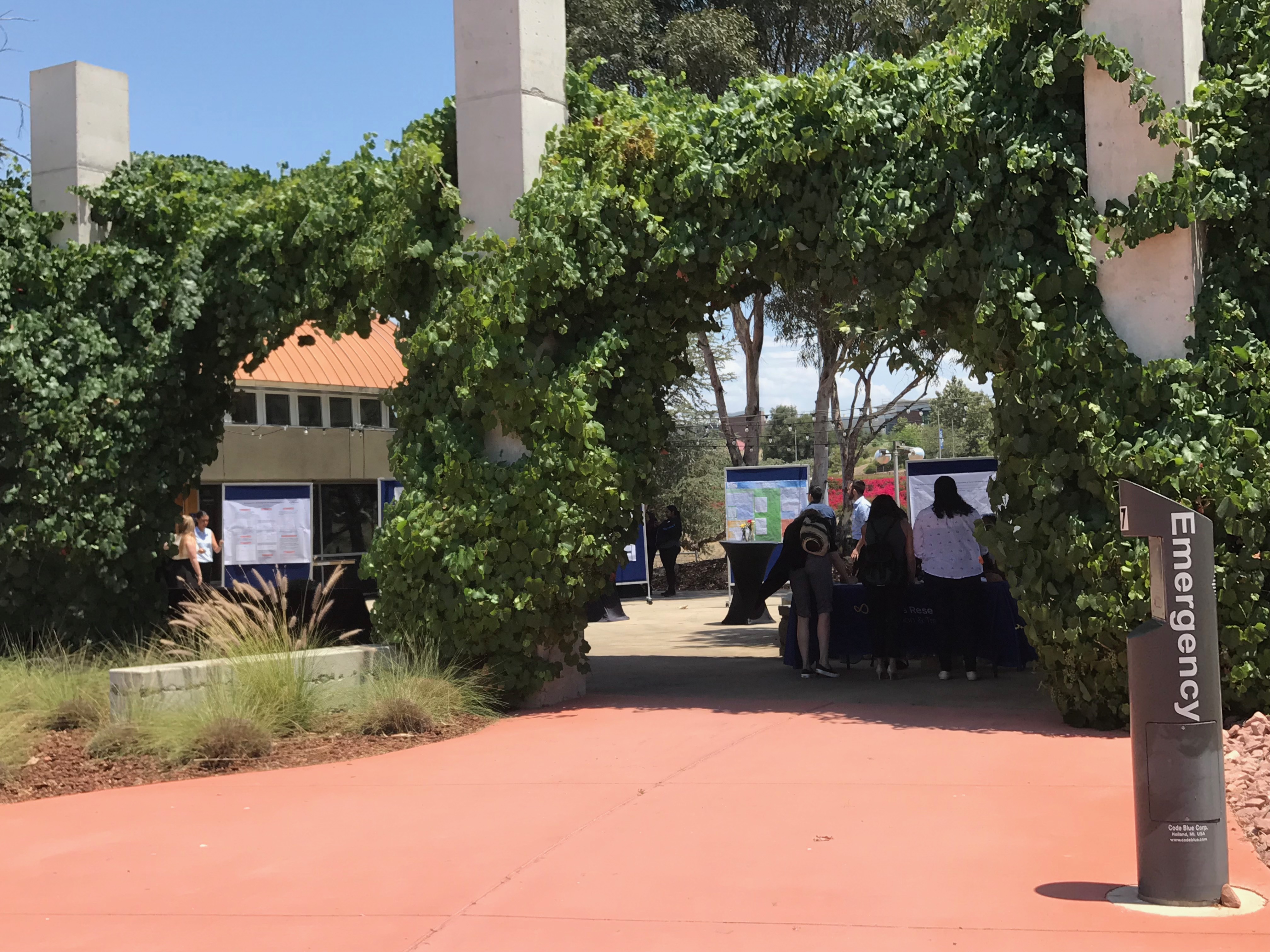
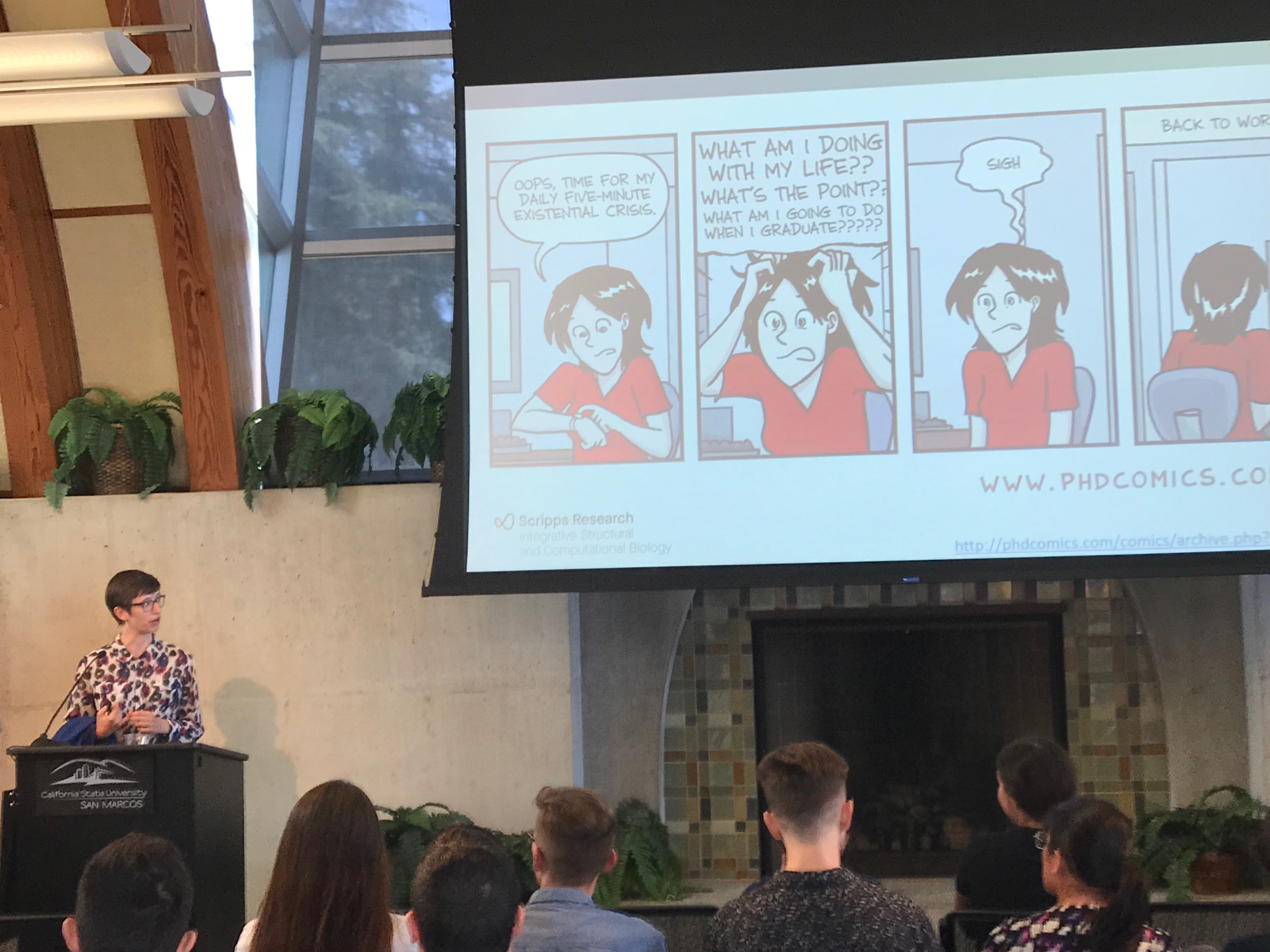
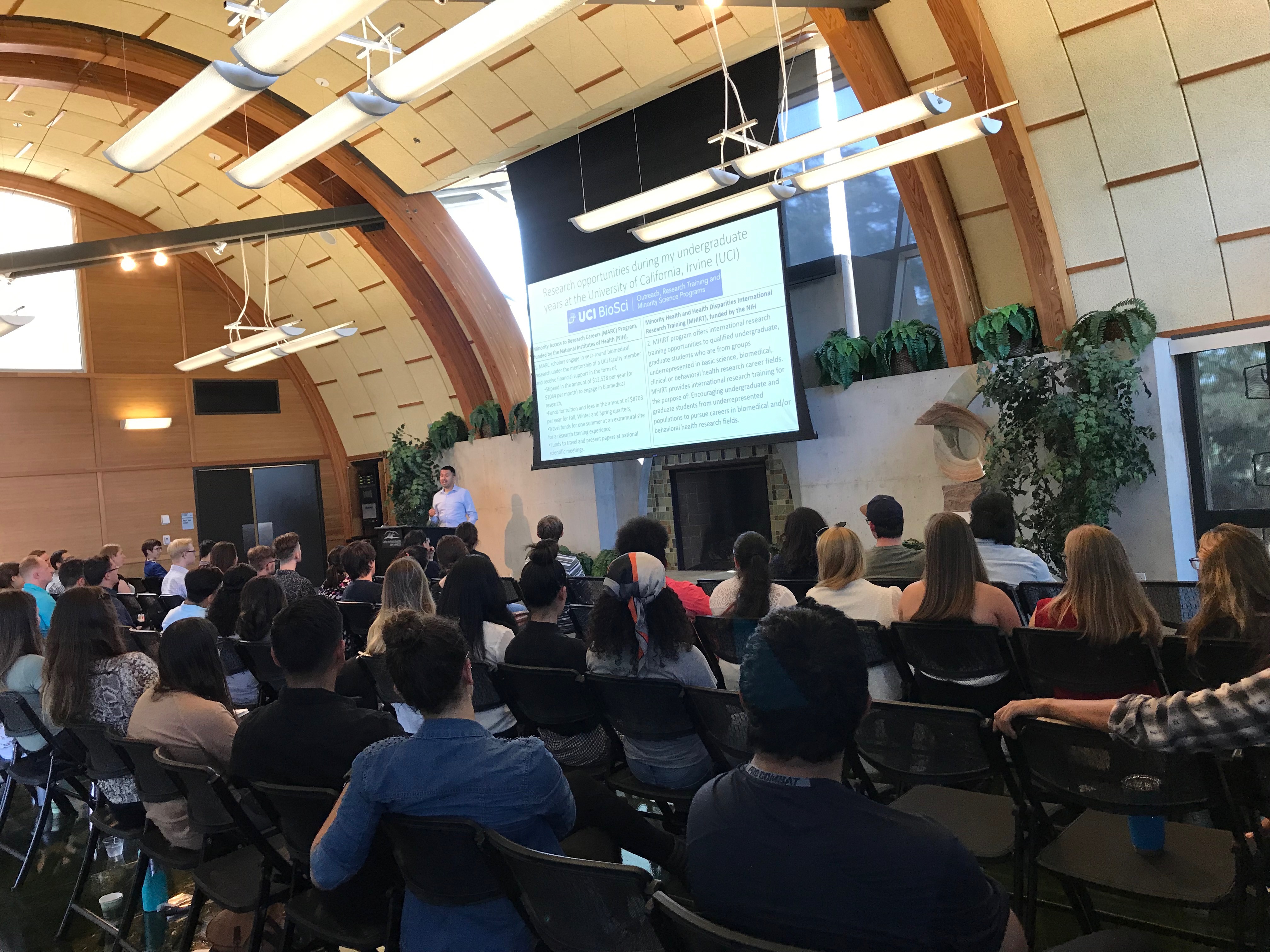
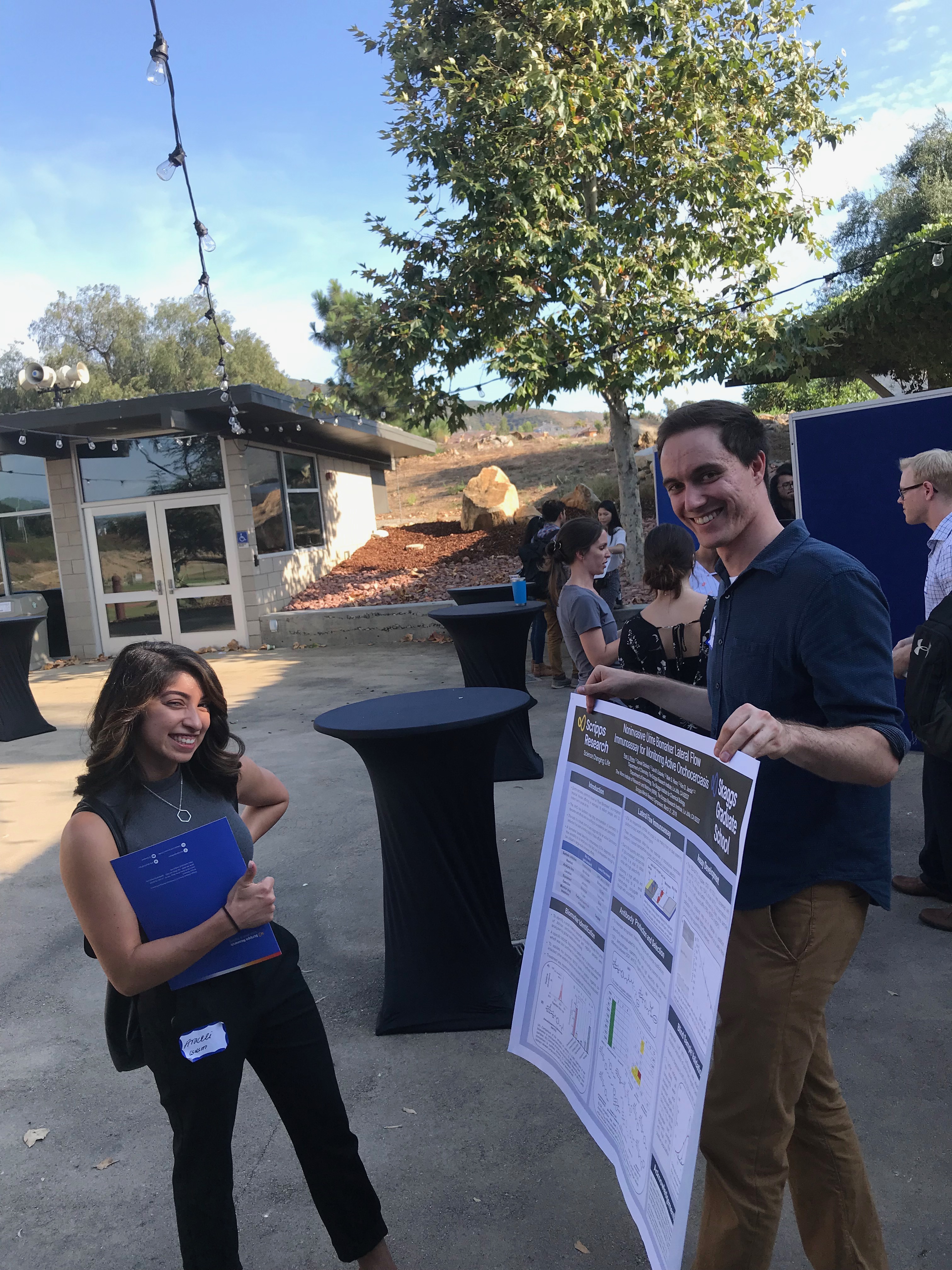
*NSPIRE, an organization co-founded by Keary in 2018, held its inaugural Symposium (#NSPIRE2019) at the McMahan House on the campus of CSU San Marcos. #NSPIRE2019 brought together roughly 80 students and faculty from all four partner institutions (Scripps Research, CSU-SM, MiraCosta, and Palomar) for a series of talks by the the 2019 *NSPIRE Fellows, a poster session, and info sessions about research and educational opportunities at Scripps Research. All participants braved the sweltering heat for lively discussion and active networking. Thank goodness for AC inside during the talks! Keep your eyes out for more to come from *NSPIRE.
About *NSPIRE: The North County San Diego Professional and Interdisciplinary Research Enrichment (*NSPIRE) program (www.nspireinitiative.com) is a partnership between Scripps Research, CSU San Marcos, Palomar, and MiraCosta that operates with financial support of the North County Higher Education Alliance (NCHEA3). The


syn-selective 1,2-carboboration and -silylation pre-print online
Our latest work on directed alkene functionalization appears online today as a preprint in ChemRxiv. Specifically we describe a method for Pd(0)-catalyzed alkene syn-1,2-carboboration and -silylation, allowing streightforward access to structural complex alkylboronates and -silanes. Notable aspects of the method include its tolerance for all different alkene substitution patterns (mono-, di-, tri-, and tetrasubstituted alkenes), with the regioselectivity completely dictated by the directing group. Additionally, electron-rich heterocycles, such as indole, can also participate in this reaction; undergoing dearomative 1,2-difunctionalization. We further show that a chiral bidentate directing group can be used in place of the standard 8-aminoquinoline auxiliary to allow for control of absolute and relative stereochemistry in the reactions. Congrats to all of the coauthors from the Engle lab: Zhen, Jiahao, Xiaohan, and Yang (particularly undergrad co-authors Jiahao and Xiaohan). Thanks too to our BMS collaborators and organoboron grand masters, Ryan and Matt. Well done, team! (For a link to the article, click here.)
Welcome Juntao!
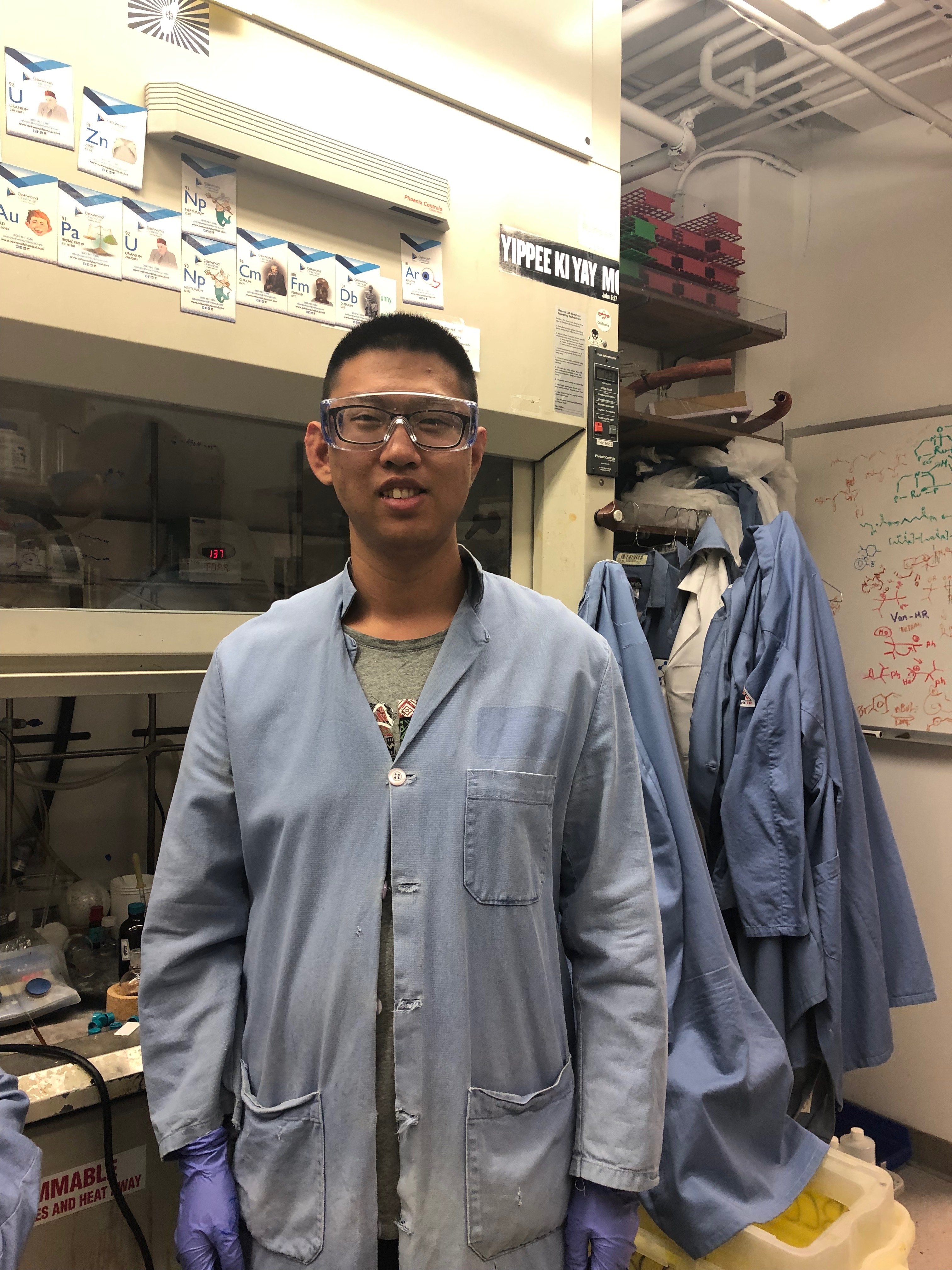
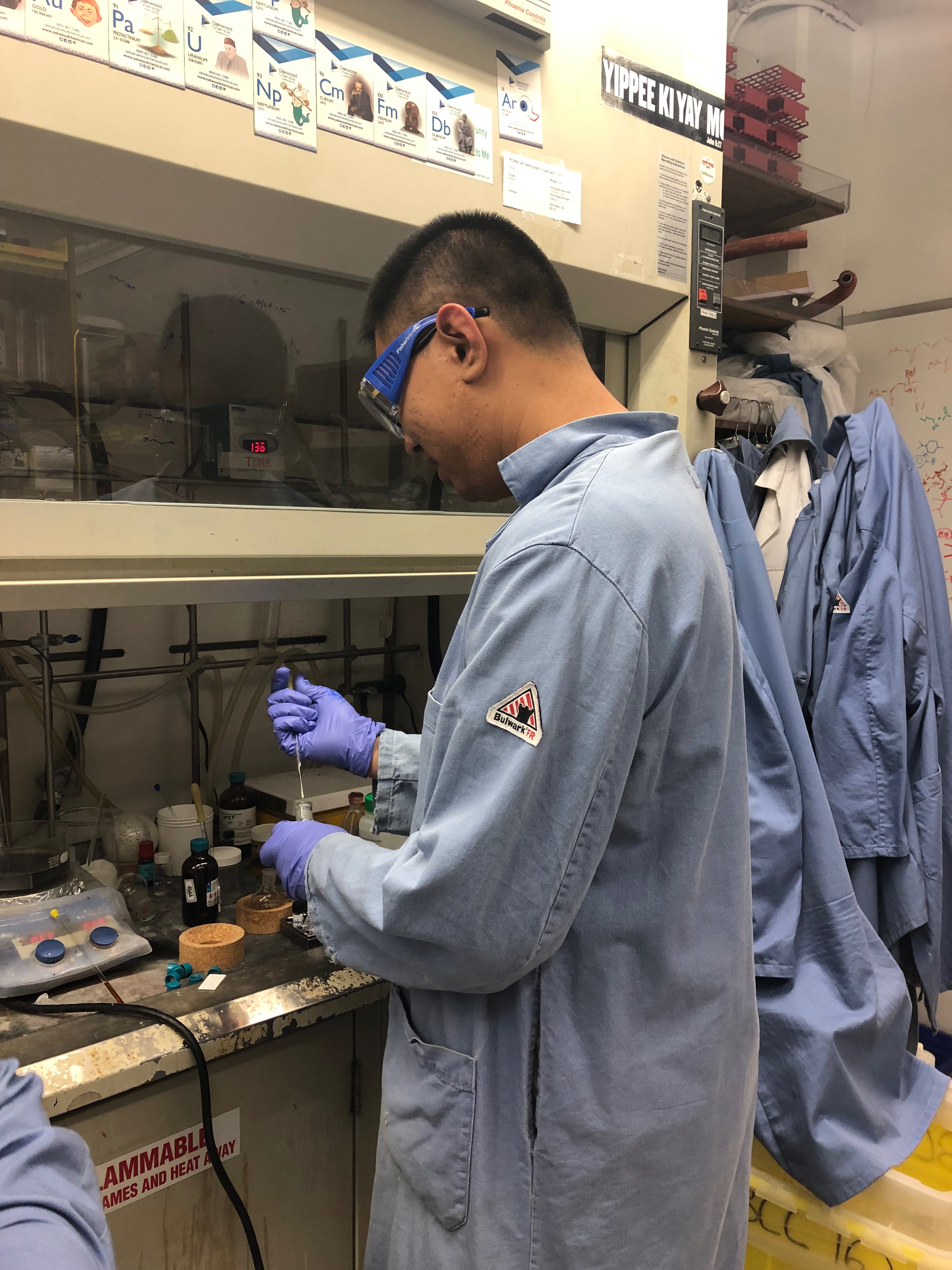
Juntao is the latest undergraduate to intern in our lab! This Nankai University student is working (and reuniting) with Mingyu. He has wasted no time in getting started and we’re excited to work with him over the next six months!
Zhen is selected as a finalist for the 2019 Reaxys PhD Prize
Congratulations to Zhen, who has been selected as a Finalist for the 2019 Reaxys PhD Prize! Zhen was acknowledged for his 2016 J. Am. Chem. Soc. publication, “β,γ-Vicinal Dicarbofunctionalization of Alkenyl Carbonyl Compounds via Directed Nucleopalladation.” The 45 Finalists, selected from 360 nominations, are invited to a the Reaxys PhD Prize Symposium, which takes place in Amsterdam on Oct 3 and 4, 2019.

(BT)S Directing Group paper accepted for publication
For the past four years, a major focus of our research has been developing substrate-directed Heck- and Wacker-type alkene hydrofunctionalization and 1,2-difunctionalization reactions. In particular, we’ve previously found that alkenyl amides containing removable bi- and tridentate directing groups are highly effective substrates, owing to the ability of the directing group to facilitate regioselective addition of the first reaction partner and then subsequently form a stabilized palladacycle that can be intercepted with a proton, nucleophile, or electrophile. Based on these results, we became interested in identifying news weakly coordinating directing groups that can enable regioselective addition of a nucleophile and then allow a site-selective β-H elimination.
In a manuscript appearing online today in ACS Catalysis, we describe the discovery and development of the benzothiazole thioether, (BT)S, directing group for oxidative Heck and C–H activation reactions (click here). In a colossal 15-page-long (!!!) paper covering reaction development, mechanistic studies, and applications in total synthesis, Andrew, Kin, and Malkanthi, demonstrate the unique coordination properties of (BT)S and showcase its synthetic versatility . Congrats to the three Engle lab authors listed above, and huge thanks to our tireless collaborator Jason from the Scripps Research Automated Synthesis Facility for guidance on high-throughput experimentation, design of experiments, and kinetics! In case anyone missed it, a pre-print of this work was published on ChemRxiv back in early April (click here).


Welcome Houxian and Zhongqian!


Two senior undergraduates from Tsinghua University, Houxian and Zhongqian, started their internships with Zhen and Yang, respectively. They’re already doing great work using the glove box and running reactions. Summer time in the Engle lab is going to be a blast.
Copper-Catalyzed Hydroboration to access cyclopropyl boronates: pre-print online
Appearing online today in ChemRxiv is a pre-print describing a collaboration with Pfizer’s Oncology Medicinal Chemistry group and with Prof. Peng Liu’s computational organic chemistry lab. With Pfizer, we continue to work together develop new catalytic methods to access strained carbo- and heterocycles. With the Liu group, we team up to study mechanism and ligand effects in catalytic alkene addition chemistry. In the latest story to emerge from these efforts, we report that benzylidene cyclopropanes (BCPs), which can be prepared from benzaldehydes in a single step by Wittig olefination, can undergo pathway-selective hydroboration under the action of a copper-bisphosphine catalyst. Depending on the structure of the phosphine ligand, two divergent product outcomes can be obtained, with the cyclopropane opening via β-carbon elimination or remaining intact. Though Lewis basic heterocycles often inhibit catalysis with late transition metals, this is not the case here, as the tolerance for a wide variety of pyridines, quinolines, etc., is generally excellent. This is makes it well-suited for use in pre-clinical drug discovery and development. Thanks to our collaborators at Pfizer for helping us develop and field-test this method, and to our collaborators in the Liu lab for invaluable insight regarding the role of the ligand in dictating pathway selectivity. For a link to the pre-print, click here.)
Welcome Kane!
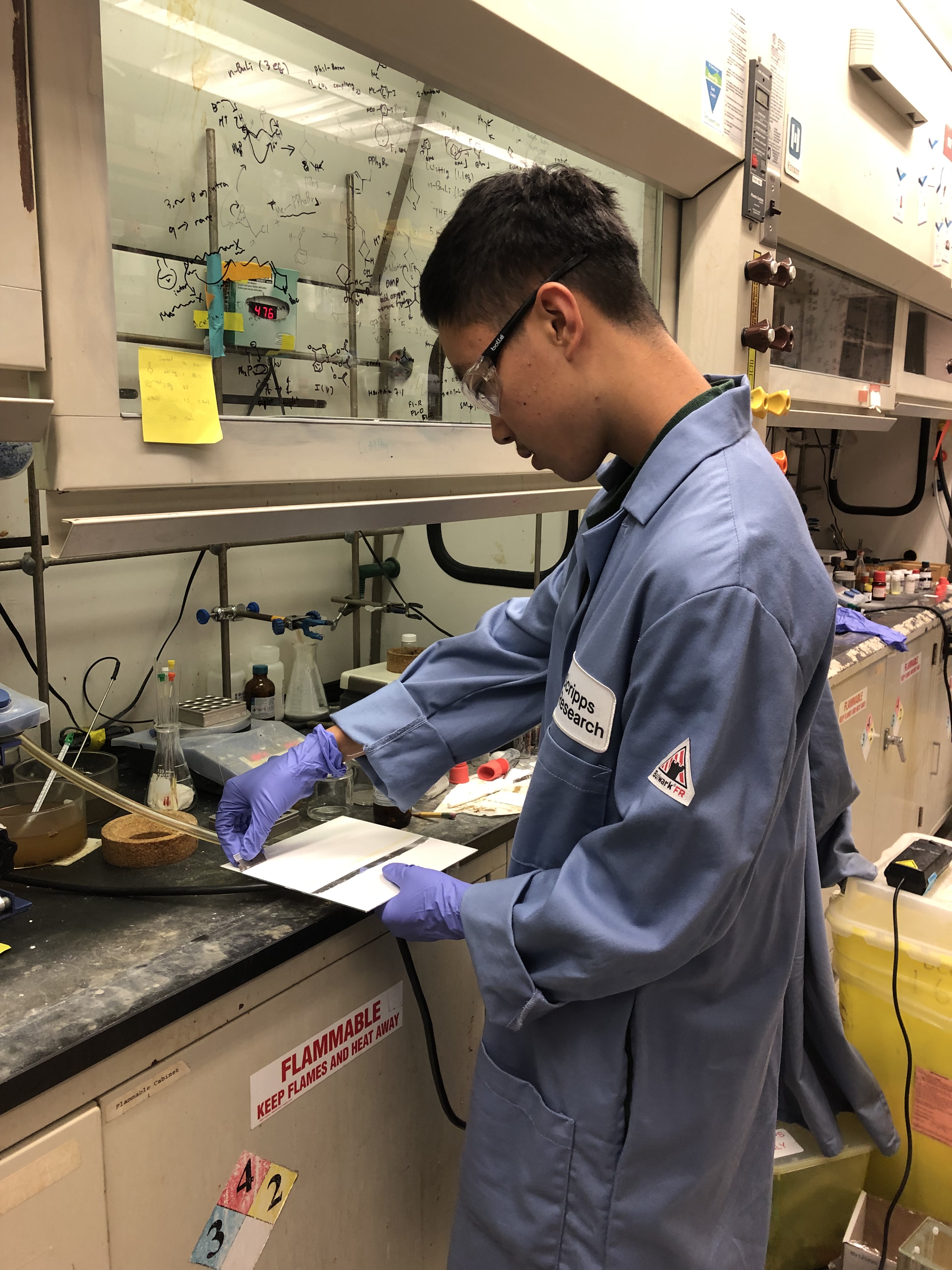

High school intern, Kane, begins working with mentor Taeho! He’s wasted no time in getting his gloves dirty and running columns and prep TLCs. We’re excited to teach him all about organometallics!
Reductive Heck Review is Online
Our review on palladium(0)-catalyzed reductive Heck coupling of alkenes appears online today in the new Cell Press journal, Trends in Chemistry. Reductive Heck hydroarylation is a rapidly technology that has already found utility in complex molecule synthesis and offers exciting prospects in pharmaceutical development. In 1990 Sandro Cacchi wrote a comprehensive review on this topic (click here), but much has happened in the last 30 years, and as our group has become increasingly interested in this topic, we thought it was time to summarize the state of play to stimulate further interest in this important area. Congrats to Luke and John, and special thanks to Steve and Martin from Bristol-Myers Squibb for their involvement throughout the process, and especially for offering insight into opportunities of reductive Heck coupling in the pharmaceutical industry. For a link to the review article click here.


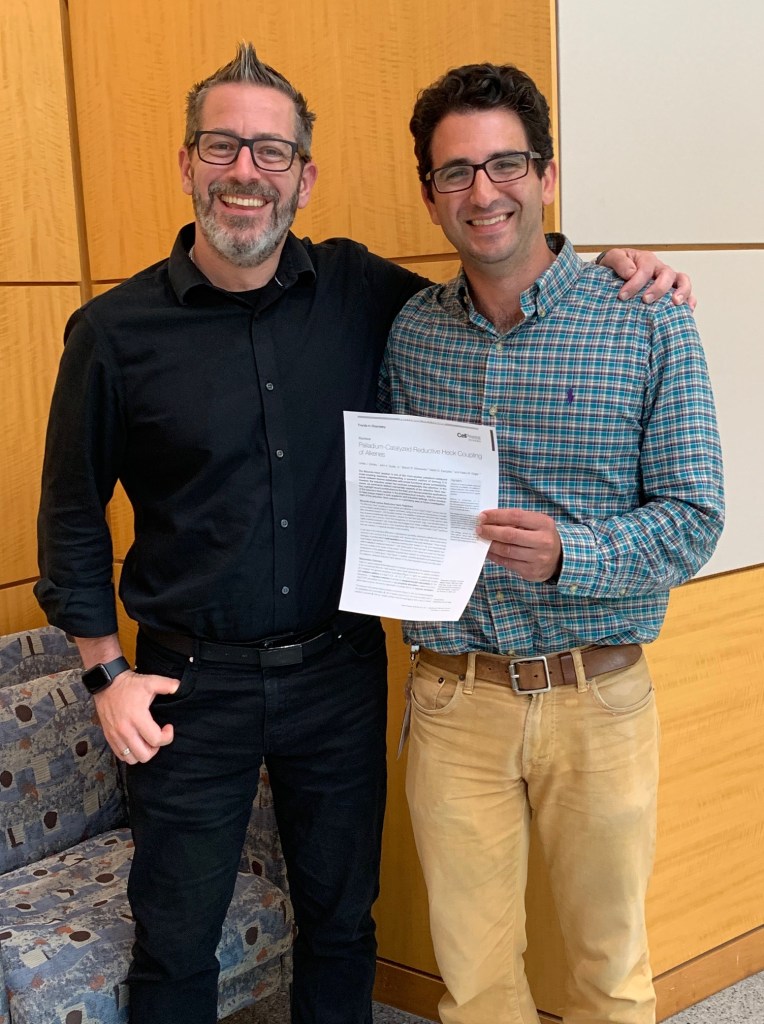
(not pictured: John)
 Molecular Complexity through Catalysis