Comprehensive Bisphosphine Mono-oxide Study – Out this Week in JACS

The peer-reviewed version of our paper on palladium–bisphosphine mono-oxide (BPMO) complexes is out this week in J. Am. Chem. Soc. Working in close collaboration with the Blackmond lab and Bristol Myers Squibb over the past three years, we developed a robust method for synthesizing numerous structurally diverse palladium–BPMO oxidative addition complexes bearing different ligands, demonstrate a workflow for diagnosing the relevance of BPMO formation to catalytic reactions of interest, and compare solid state structure of oxidized and non-oxidized “matched pair” complexes to determine the structural consequences of BPMO formation. Congrats to the entire team led by Shenghua!

For a link to the full article in J. Am. Chem. Soc., click here: https://pubs.acs.org/doi/10.1021/jacs.4c10718

As a reminder, the an earlier version of this paper was published as a pre-print in ChemRxiv in August 2024: https://chemrxiv.org/engage/chemrxiv/article-details/66aeabbd5101a2ffa809a6fa
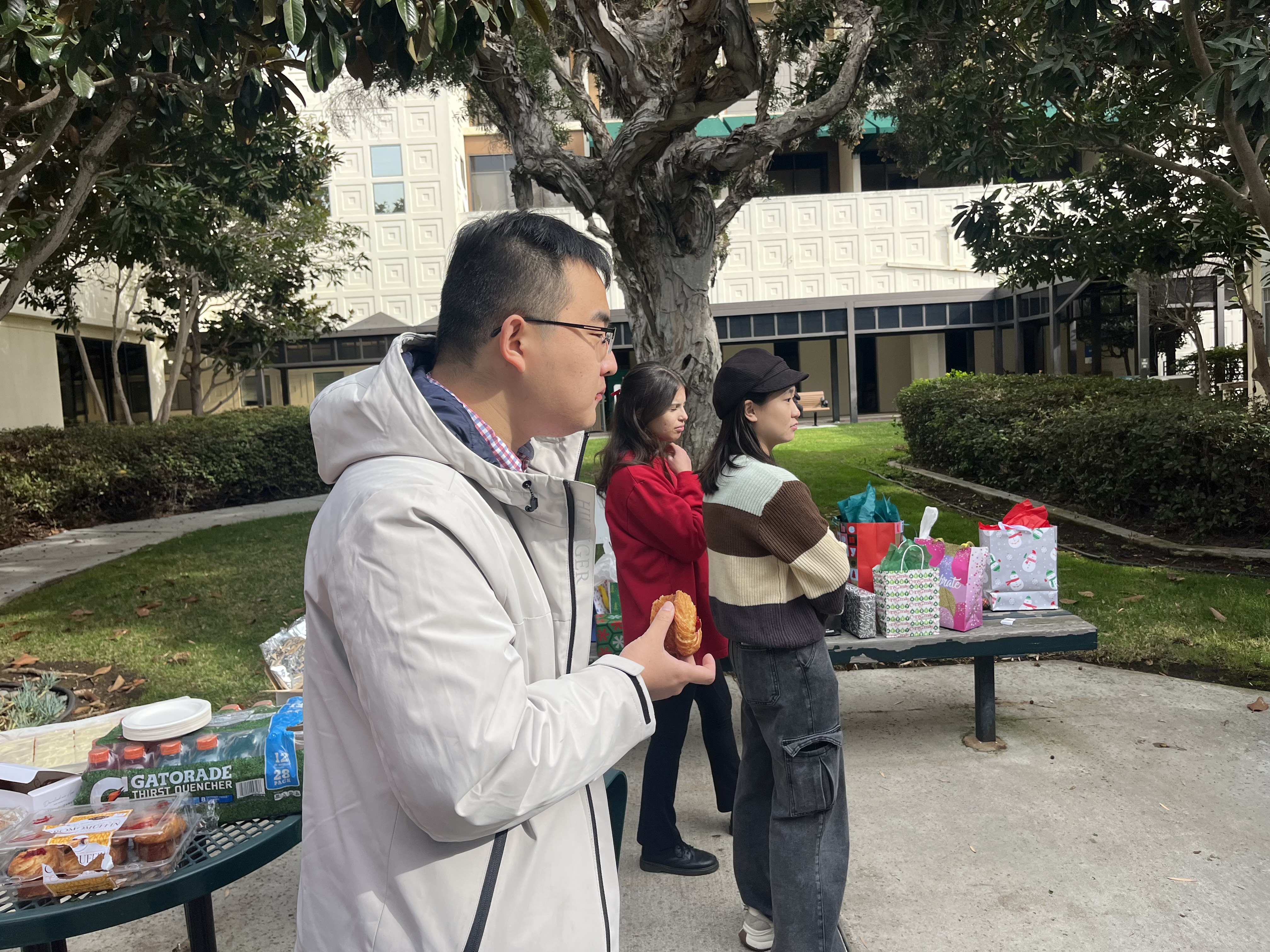
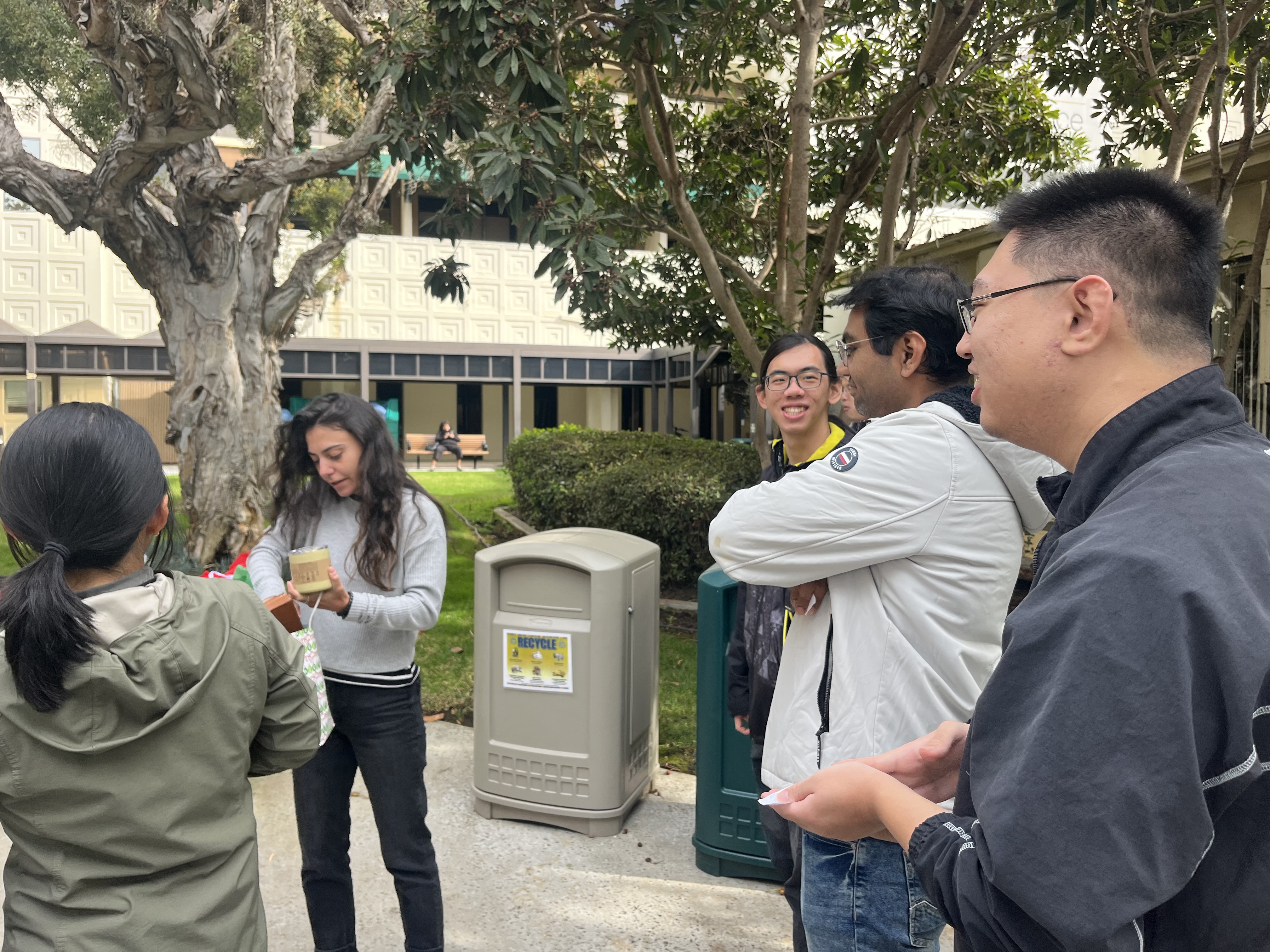
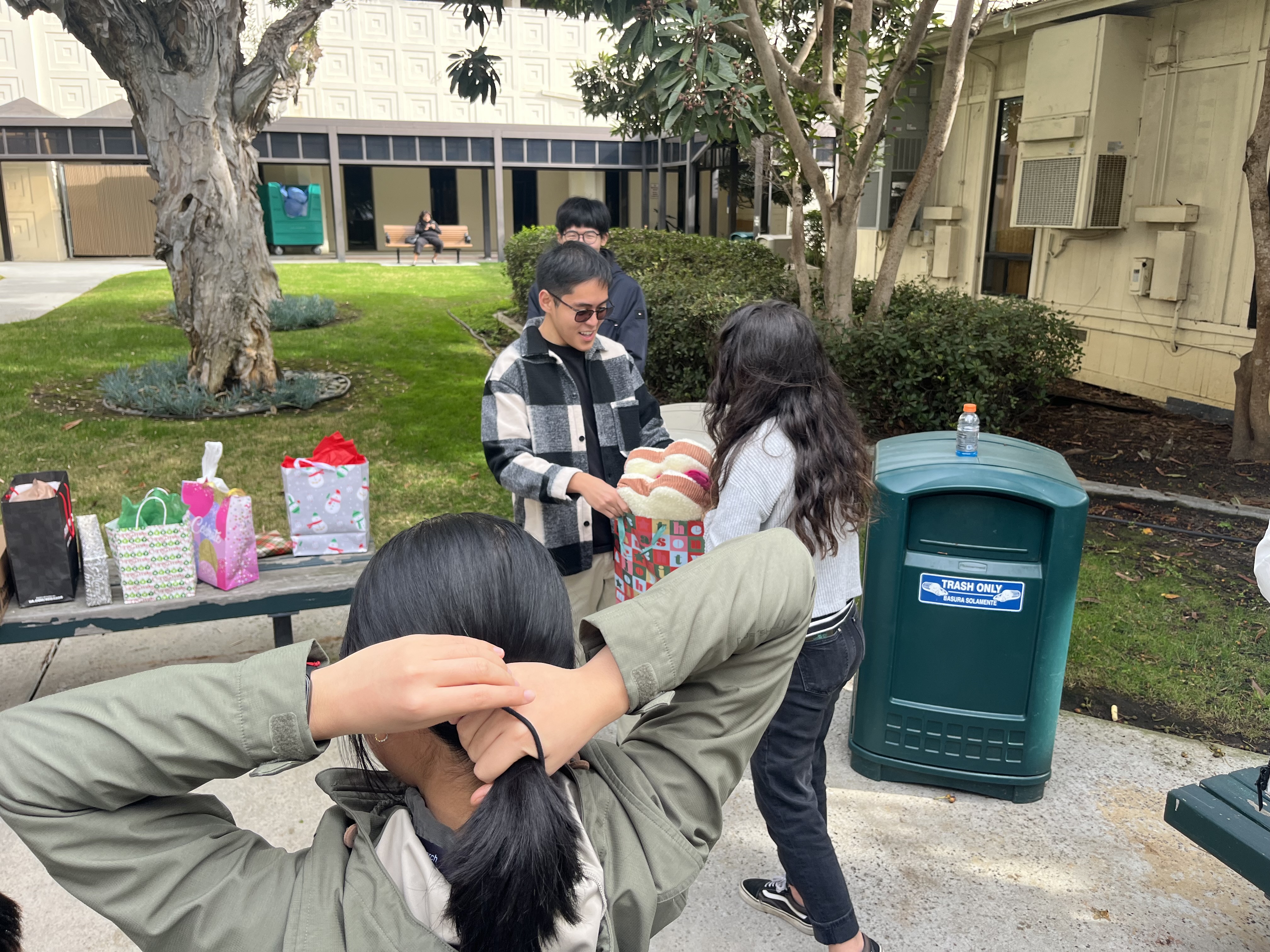
Engle Lab Holiday Party 2024

The Engle lab gathered over tacos, deserts, and other potluck fixings for our annual white elephant gift exchange. Dramatic gift stealing was down compared to previous years, but spirits were high! The group enjoyed celebrating successful 2024 and looking forward to fantastic year ahead.

Ligand-Enabled Regioreversed Conjugate Additions – Pre-print Now Online

In the lab’s latest pre-print, we develop a new and improved catalyst system for “regioreversed” conjugate additions—hydrofunctionalizations that proceed with high levels of α-selectivity owing to the unique mechanism involving a trans-PdII(Ar)(H) intermediate. Key to the success of this study was the discovery that trans-spanning bisphosphine ligands can suppress various undesired side reactions and improve reactivity and selectivity with more challenging alkenyl and alkynyl bromide coupling partners. The method employs our lab’s bench-stable pre-catalysts Pd(COD)(DQ) and operates under air without any special precautions. Congrats to the entire team, Wen-Ji, Evan, Sara, Alena, Gabby, and John!

For a link to the ChemRxiv pre-print, click here: https://chemrxiv.org/engage/chemrxiv/article-details/674696ccf9980725cf181fed

Tungsten-Catalyzed Stereodivergent Olefin Isomierzation – Paper Now In Press

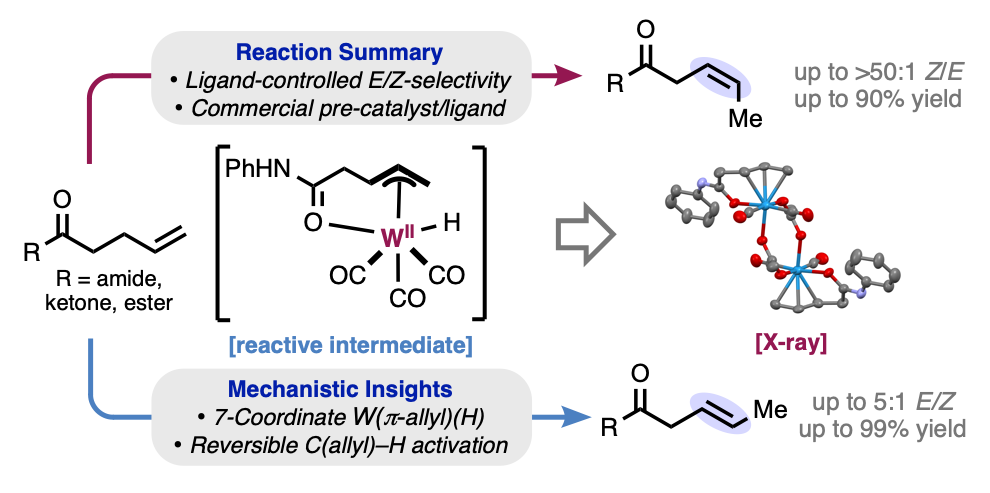
The final peer-reviewed version of our tungsten-catalyzed olefin isomerization method appears in press this week in Chemical Science. The method offers a mild and reliable way to perform kinetic isomerization of β,γ-unsaturated carbonyl compounds without competitive formation of the thermodynamic (conjugated) byproduct. We find that E versus Z stereoselectivity can be controlled by modulating the ligand environment around the tungsten center to grant access to either isomer as desired. Congrats to the project team, Tanner, Camille, Hang Chi (Calvin), and Raul!

For a link to the paper in Chemical Science, click here: https://pubs.rsc.org/en/content/articlelanding/2024/sc/d4sc07093c

As a reminder, an earlier version of this paper was published as a pre-print in ChemRxiv in November 2023: https://chemrxiv.org/engage/chemrxiv/article-details/6554cf6adbd7c8b54b514d16